In the rapidly evolving world of embedded systems, the Xilinx Zynq 7000 development board has long been the gold standard for engineers requiring a robust ARM/FPGA SoC development board. From the entry-level Zynq 7010 development board to the high-end Zynq 7100 development board, the Zynq ecosystem—including the famous Digilent ZedBoard Zynq 7000 and the Arty Z7 Zynq 7000 SoC development board—provided a versatile platform for hardware acceleration.
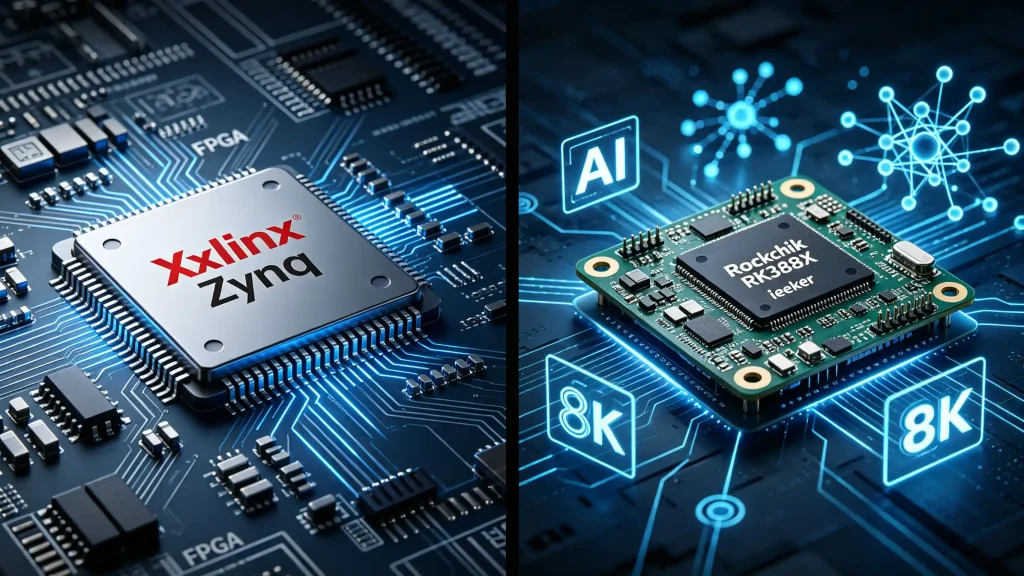
However, as we move deeper into the era of Edge AI and 8K video processing, many developers are finding that traditional Zynq FPGA development board architectures are hitting a performance-per-watt ceiling. At IEEKER, we specialize in , and this article explores why modern industrial projects are increasingly migrating from Zynq to high-performance ARM SoCs like the RK3588.
1.Architecture Evolution: FPGA Flexibility vs. Hardwired Efficiency
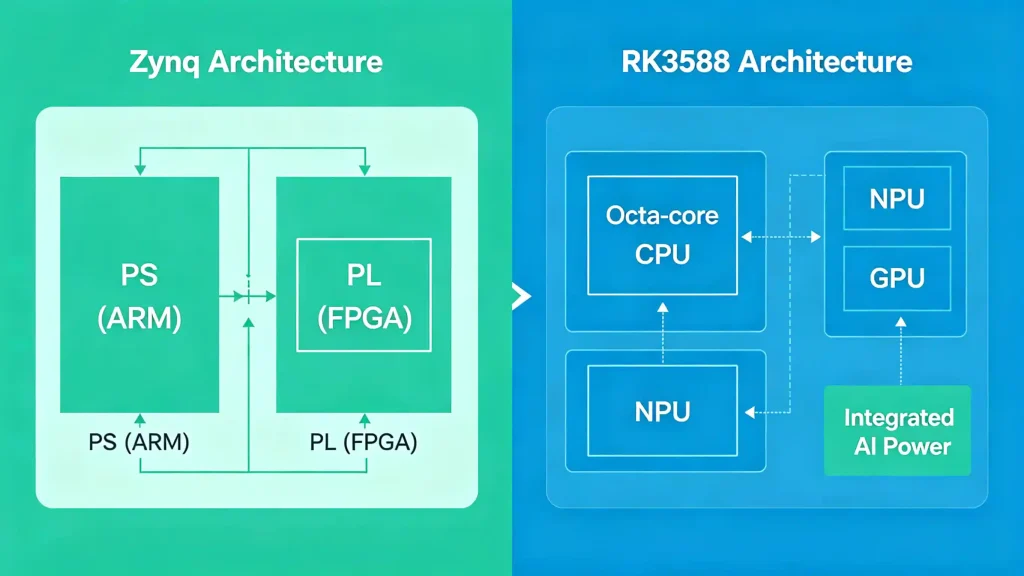
The core appeal of a Zynq development board (such as the Zybo Z7 or ZedBoard Zynq 7000 ARM FPGA SoC development board) is its Programmable Logic (PL). This allows for custom hardware circuits tailored to specific tasks.
However, the Zynq 7020 development board specs reveal a dual-core ARM Cortex-A9 processor—an architecture that, while reliable, struggle with modern computational loads. In contrast, modern Rockchip SoCs offer:
Dedicated NPU: While you have to manually program AI logic in a Zynq 7000 development board, Rockchip SoCs feature built-in Neural Processing Units (NPU) (up to 6 TOPS).
Superior Multi-core Processing: Moving from a dual-core A9 to an octa-core A76/A55 configuration provides a massive leap in Linux OS responsiveness.
2.Comparing the Specs: Is Your Project Outgrowing Zynq?
When reviewing Zynq 7020 development board specs, most of the silicon area is dedicated to FPGA fabric. This is excellent for low-latency signal processing but inefficient for data-heavy applications like computer vision or complex HMI.
| Feature | Zynq 7000 Series (7010/7020) | Rockchip RK3588 (ieeker Solution) |
| CPU Architecture | Dual-core Cortex-A9 | Octa-core (4x A76 + 4x A55) |
| Video Processing | Software-based / Limited | 8K@60fps HW Decode/Encode |
| AI Acceleration | Requires FPGA Programming | Integrated 6.0 TOPS NPU |
| Connectivity | Basic (Gigabit Ethernet) | PCIe 3.0, Dual 2.5G GbE, WiFi 6 |
For those currently using a Zynq 7030 development board or searching for the power of a Xilinx Zynq UltraScale+ development board, the jump to an RK3588 development board often yields better results in multimedia tasks at a fraction of the cost.
3.From Prototype to Production: The Development Gap
Developing on a Zybo Zynq 7000 development board or a Xilinx Zynq UltraScale+ MPSoC development board requires deep knowledge of VHDL/Verilog and the complex Vivado design suite.
For many commercial applications—such as industrial HMI, digital signage, and smart gateways—the Rockchip development ecosystem offers a faster “Time-to-Market”:
Standard Linux/Android support: No need to build custom hardware logic for standard peripherals.
Rich Multimedia: Native support for 4K/8K displays, which is difficult to implement on a standard Zynq FPGA development board.
Cost-Effectiveness: Comparing the Zynq mpsoc development board price to a Rockchip SoM, the latter typically offers significantly higher performance per dollar.
4. When Should You Still Choose Zynq?
We believe in choosing the right tool for the job. You should stick with a Xilinx Zynq development board or the advanced Zynq UltraScale+ mpsoc development board if your project requires:
Sub-microsecond deterministic latency for high-speed motion control.
Custom proprietary hardware interfaces not found in standard SoCs.
High-speed ADC/DAC integration for advanced RF applications.
However, for 90% of industrial and AIoT applications, the transition from an Arty Z7 or ZedBoard to a Rockchip-based solution is the logical step forward.
Conclusion: Driving the Future of Embedded Systems
At IEEKER, we understand the legacy of the Zynq-7000 arm/fpga soc development board. But our mission is to provide the next generation of embedded power. Whether you are looking to upgrade from a Zynq 7010 or seeking a more powerful alternative to the Zynq ultrascale development board, our Rockchip-based core boards provide the reliability and performance your modern project demands.
Ready to upgrade your hardware? Explore our RK3588 System on Modules and see how we can accelerate your industrial innovation.
References
AMD Xilinx Zynq-7000 Product Selection Guide: Official Resource
Comparative Study on SoC vs. FPGA for Edge Computing: IEEE Xplore Digital Library
Rockchip RK3588 Technical Introduction: Rockchip Open Platform