In today’s fast-evolving embedded systems landscape, off-the-shelf development boards are no longer sufficient for many industrial applications. While platforms like Raspberry Pi 5 or Arduino Uno are excellent for prototyping, they often fall short in terms of scalability, durability, and long-term supply stability.
For industries such as automation, smart cities, medical devices, and edge AI, a custom development board provides:
- Tailored performance for specific workloads
- Optimized interfaces and connectivity
- Industrial-grade reliability
- Long lifecycle support
If you’re building a product—not just a prototype—custom hardware is often the only viable path.
👉 You may also be interested in our guide on embedded platforms:RK3588 Embedded Board.
1. Define Your Project Requirements
Before diving into hardware design, it’s critical to clearly define your requirements.
Application Scenario
High-End AI & Vision: Requires NPU acceleration for object detection or 8K video (e.g., Rockchip RK3588S).
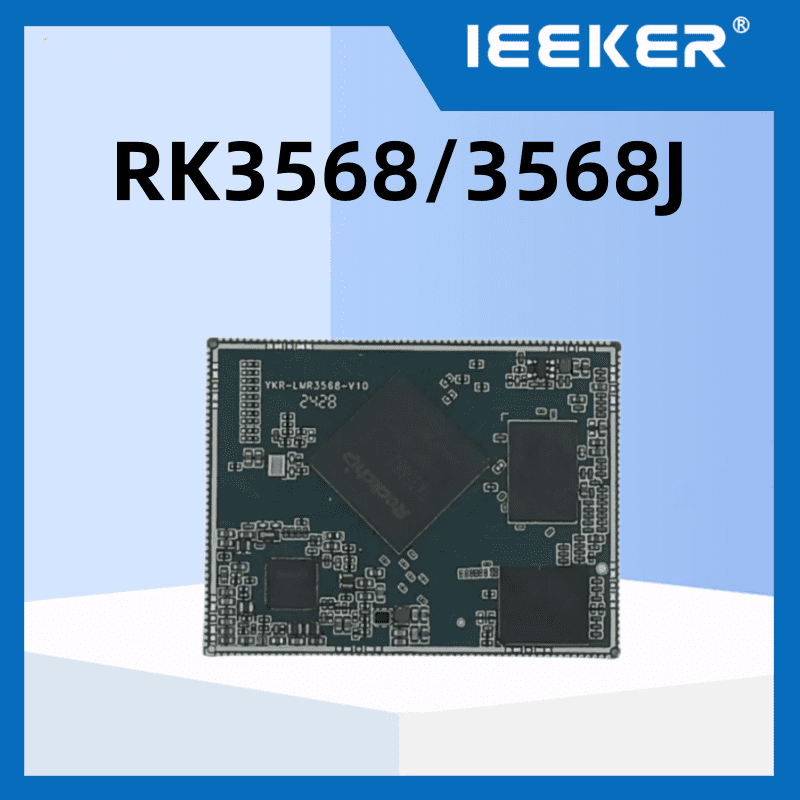
Industrial Control: Prioritizes real-time I/O, CAN bus, and wide-voltage stability (e.g., Rockchip RK3568J).
Multimedia & HMI: Focuses on GPU performance and display interfaces (e.g., Allwinner H6 or Amlogic S905X3).
Performance Logic
Ask yourself:
- Do you need AI acceleration (NPU/GPU)?
- Is real-time processing required?
- What operating system will you run (Linux, Android, RTOS)?
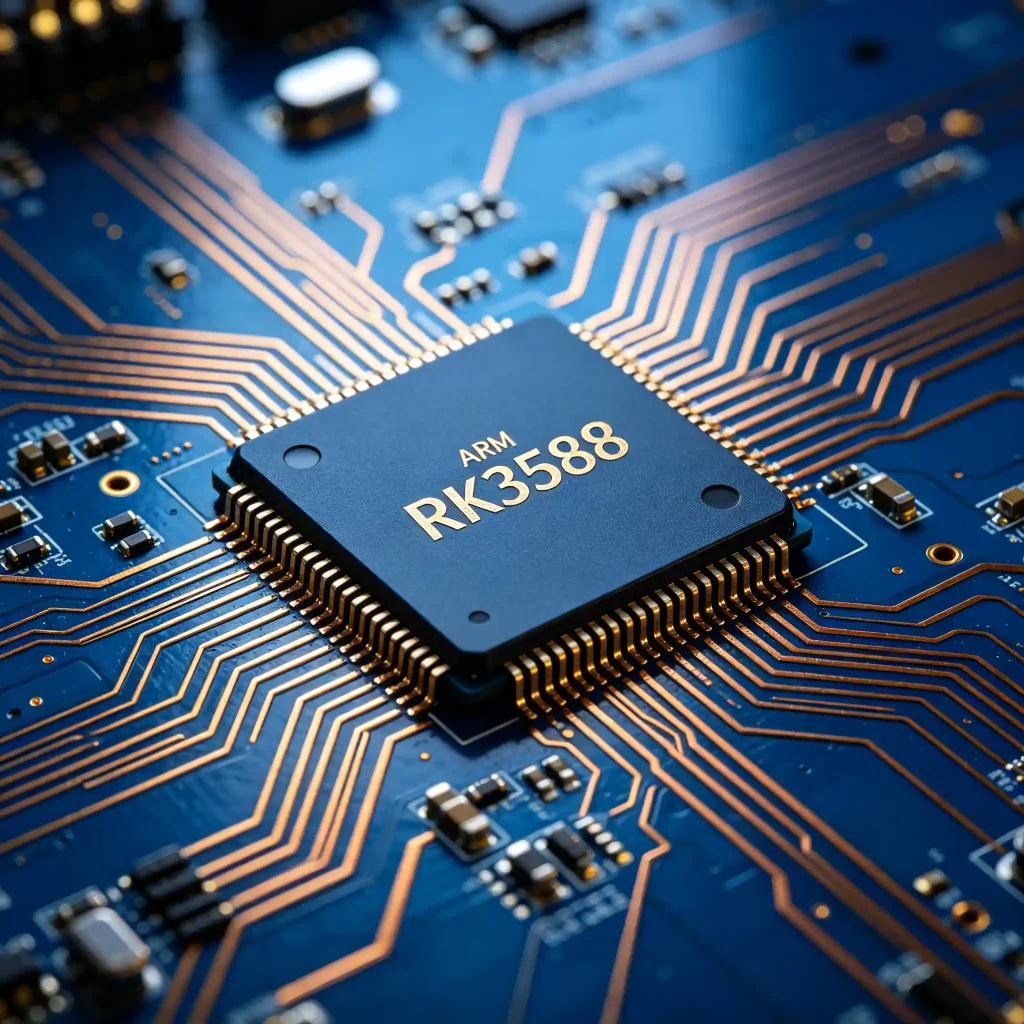
For example, high-performance AI workloads may require processors like the Rockchip RK3588 SoC.
👉 Learn more:
Arm Holdings architecture overview
Interfaces & Connectivity
Define all required I/O:
- USB, HDMI, Ethernet
- RS232 / RS485 / CAN
- GPIO, SPI, I2C
- Wireless: WiFi, 4G, 5G, Bluetooth
Poor interface planning is one of the most common causes of redesign.
2. Hardware Selection Strategy
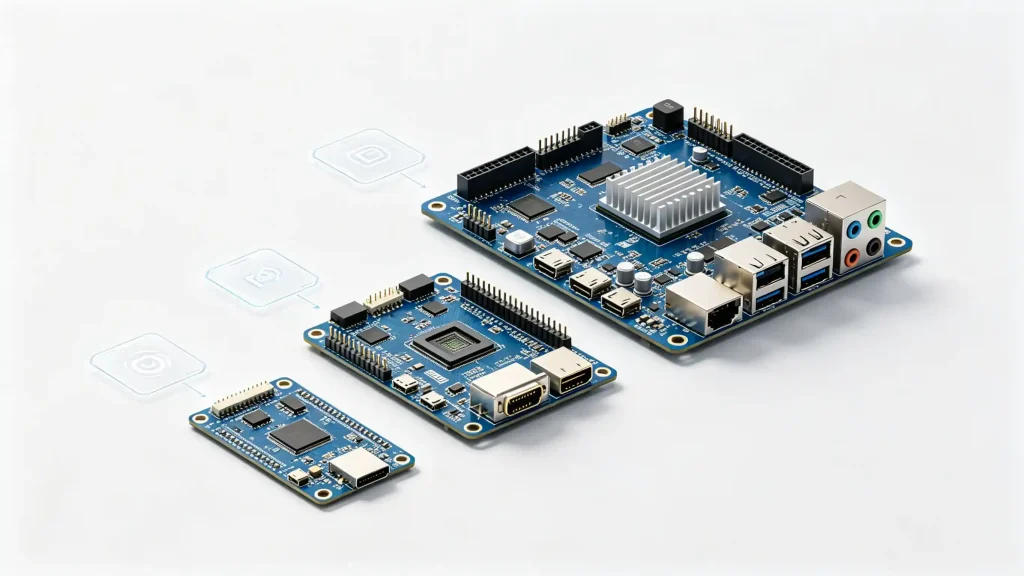
Your choice of SoC (System on Chip) dictates the entire PCB complexity.
| Tier | Core Processor | Best For | Key Advantage |
| Entry | Atmega 328 / AVR | Simple Sensors | Low power, instant boot |
| Mid | RK3328 / Allwinner H6 | Multimedia / Signage | Cost-effective 4K output |
| Elite | RK3588S / RK3568 | Edge AI / Robotics | 6 TOPS NPU, Dual 1G Ethernet |
For a deeper technical comparison of processor architectures and performance considerations, refer to this Intel Core processor technical resource documentation from Intel.
Memory & Storage
- RAM: determines multitasking capability
- Storage: eMMC vs SSD vs TF card
Industrial systems often prefer eMMC or SSD due to their higher reliability and endurance in harsh environments.
Power Management
A stable power design is critical:
- Wide voltage input (e.g., 9V–36V for industrial use)
- Protection circuits (overcurrent, surge)
👉 For industry-standard power design guidelines and best practices, see this power management design overview provided by Texas Instruments.
3. PCB Design Best Practices
PCB design is where theory meets real-world performance. A well-designed PCB ensures signal integrity, system stability, and long-term reliability—especially in industrial environments.
Layout & Signal Integrity
Proper PCB layout is critical for avoiding performance issues:
- Keep high-speed signal traces as short as possible
- Separate analog and digital ground planes
- Use controlled impedance for high-frequency signals
Even minor layout mistakes can lead to electromagnetic interference (EMI), data errors, or unstable operation.
👉 For a deeper understanding of real-world PCB production and assembly considerations, refer to this SMT assembly process guide for RK3588-based boards.
Layer Stack & Board Structure
Choosing the correct PCB stack-up directly impacts performance:
- 2-layer PCB – suitable for simple designs
- 4-layer PCB – standard for most embedded systems
- 6-layer+ PCB – required for high-speed or complex applications
Advanced designs often require careful planning of power planes and signal routing layers.
👉 You can also explore different manufacturing approaches in this through-hole (THT) PCB assembly process overview.
Thermal & Reliability Design
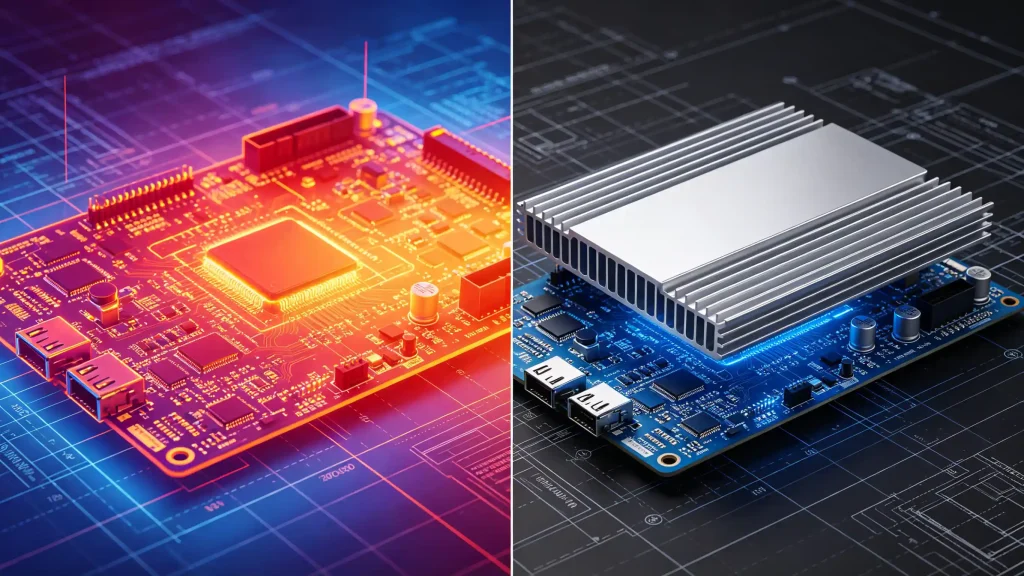
Thermal management is often underestimated but critical:
- Use heat sinks or thermal vias
- Optimize component placement for airflow
- Ensure stable operation under high temperatures
For industrial applications, PCB manufacturing quality and assembly processes play a crucial role in long-term reliability.
👉 EMC/thermal design reference: IEEE standards
👉 For additional insights into PCB production quality and supply considerations, you can reference resources from Digi-Key Electronics and Texas Instruments.
4. Prototyping and Manufacturing
A design is only as good as its execution.
DFM (Design for Manufacturing): We review every board to ensure components aren’t placed too close to the edge or in “solder shadow” zones.
SMT Assembly: High-density chips like the RK3588S (BGA packaging) require X-ray inspection after SMT to ensure no hidden solder bridges.
Component Sourcing: We prioritize “Global Distribution” parts from Digi-Key or Mouser to avoid single-source supply chain bottlenecks.
👉 Process Guide: RK3588 SMT Assembly & Production Guide
5. Rigorous Testing & Validation
Industrial boards must undergo “Stress Testing” before deployment:
Functional Boot: UART log analysis for bootloader stability.
Thermal Stress: Operating the board in a 70°C chamber for 48 hours.
EMI/EMC Testing: Ensuring the board doesn’t interfere with other equipment (CE/FCC compliance).
6. Common Pitfalls to Avoid
❌ Underpowered PDN: Using cheap LDOs for high-current SoCs leading to system crashes.
❌ Poor Thermal Path: Neglecting the heat generated by the NPU during AI inference.
❌ Single-Source Lockdown: Choosing a niche chip that goes End-of-Life (EOL) in 12 months.
7. Off-the-Shelf vs Custom Development Boards
| Option | Pros | Cons |
|---|---|---|
| Standard boards | Fast, low cost | Limited scalability |
| Custom boards | Optimized, scalable | Higher upfront cost |
If your product is moving toward mass production, customization is usually the better long-term investment.
8. Professional Custom Development Board Solutions
Designing a board from scratch requires expertise in:
- Hardware engineering
- PCB design
- Firmware development
- Manufacturing and testing
That’s why many companies partner with experienced providers.
At IEEKER, we specialize in:
- ARM and x86 embedded platforms
- Industrial-grade PCB design
- End-to-end PCBA manufacturing
- Long-term supply support
Conclusion: Partner with Professional Expertise
Building a custom development board—especially one powered by complex SoCs like the Rockchip RK3588S or TI Sitara—requires a multidisciplinary team.
At IEEKER, we bridge the gap between a concept and a market-ready industrial product. We specialize in:
ARM-based Custom Hardware Design
Industrial-grade PCB Layout (High-Speed Signal focus)
Full-cycle PCBA Manufacturing & Testing
Ready to move beyond the prototype?
FAQ
What is a custom development board?
A custom development board is a hardware platform designed specifically for a particular application, offering tailored performance and interfaces.
Is it better to use a SoM (System-on-Module) or a Full-Custom chip-on-board design?
This depends on your production volume and time-to-market.
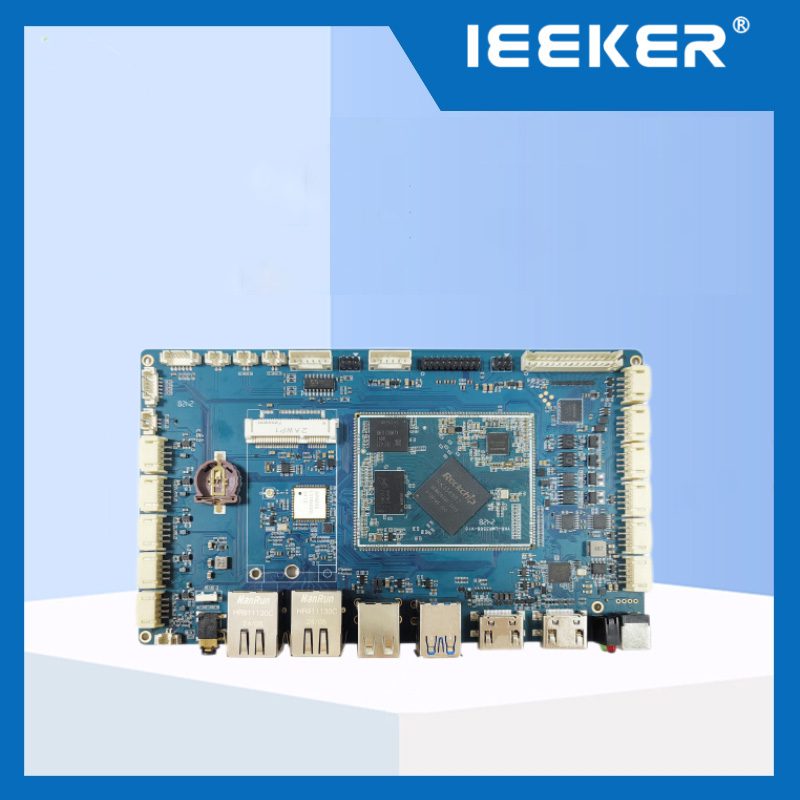
SoM + Carrier Board: Ideal for low-to-medium volumes. It reduces design complexity because the high-speed CPU/RAM routing is already done on the module.
Full-Custom (Chip-on-Board): Best for high-volume production (1k+ units) or extremely space-constrained designs. It offers the lowest per-unit cost but requires a higher upfront engineering investment for high-speed PCB layout.
How do you handle thermal issues on high-performance boards like the RK3588S?
We use a multi-layered approach:
Thermal Vias: Placing an array of vias directly under the SoC to conduct heat to the internal ground planes.
Heat Spreaders: Using specialized TIM (Thermal Interface Materials) and aluminum heatsinks.
Simulation: For industrial projects, we perform thermal modeling to ensure the board operates safely within its specified ambient temperature range.
Why should I choose RK3568J instead of the standard RK3568?
The “J” suffix stands for Industrial-grade. While the standard RK3568 is designed for consumer electronics (0°C to 70°C), the RK3568J is rated for -40°C to +85°C. It is essential for outdoor equipment, automotive applications, and factory automation where temperature fluctuations are extreme.
How long is the supply lifecycle for Rockchip and Allwinner SoCs?
Most industrial-targeted SoCs (like the RK3588 and RK3568 series) have a roadmap of 10 to 15 years. We work closely with original chip manufacturers to provide our clients with EOL (End-of-Life) notifications and “last-time-buy” opportunities to ensure your product longevity.
Can a custom board run multiple Operating Systems?
Yes. Depending on the architecture, our boards support Android, Ubuntu, Debian, Buildroot (Yocto), and even specialized RTOS (Real-Time Operating Systems). We provide the necessary BSP (Board Support Package) to ensure your software team can start development immediately upon receiving the hardware.
What is the typical lead time for a custom development board project?
A standard cycle from requirement definition to a working prototype typically takes 8 to 12 weeks:
Design & Schematic: 2–3 weeks.
PCB Layout: 2–4 weeks.
Fabrication & SMT: 2–3 weeks.
Bring-up & Testing: 1–2 weeks.