Embedded computing continues to expand rapidly across industrial automation, edge AI, machine vision and large‑scale IoT deployments worldwide. For hardware engineers, product designers and solution integrators, picking a reliable embedded hardware platform directly determines project cycle, BOM cost and long‑term product stability. Among countless ARM‑based hardware options, the Rockchip development board has earned widespread adoption for balanced performance, flexible customization and mature software ecosystem. This practical guide walks through Rockchip SoC basics, mainstream hardware models, real‑world application scenarios, key selection criteria and common technical pitfalls for commercial and industrial projects.
What Is a Rockchip Development Board
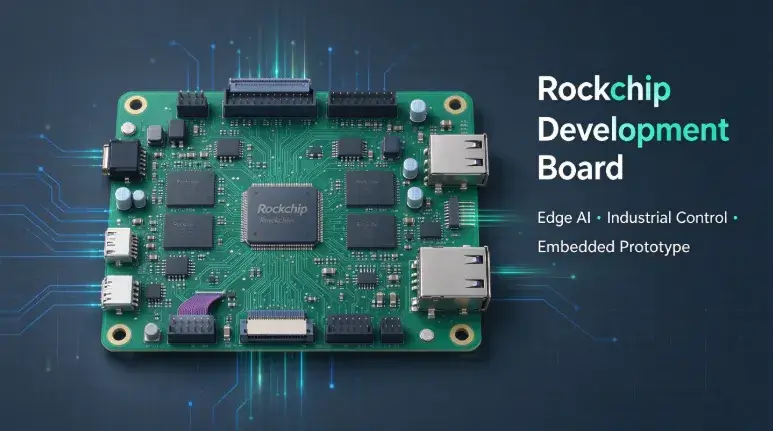
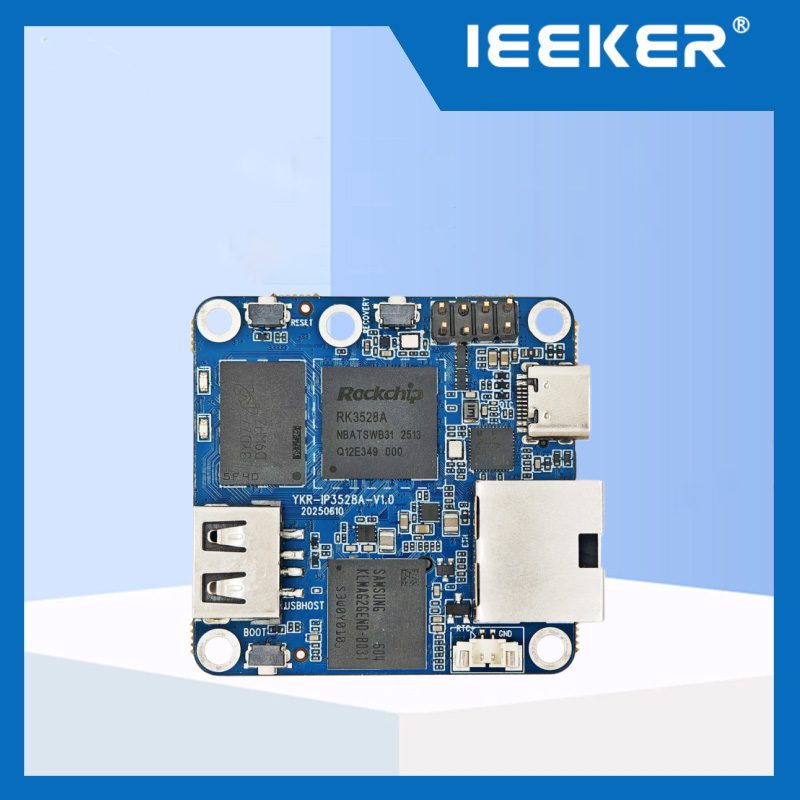
Rockchip is a well‑known Chinese fabless semiconductor vendor focusing on ARM architecture system‑on‑chip solutions. A Rockchip development board is a complete off‑the‑shelf embedded platform built around Rockchip SoCs.
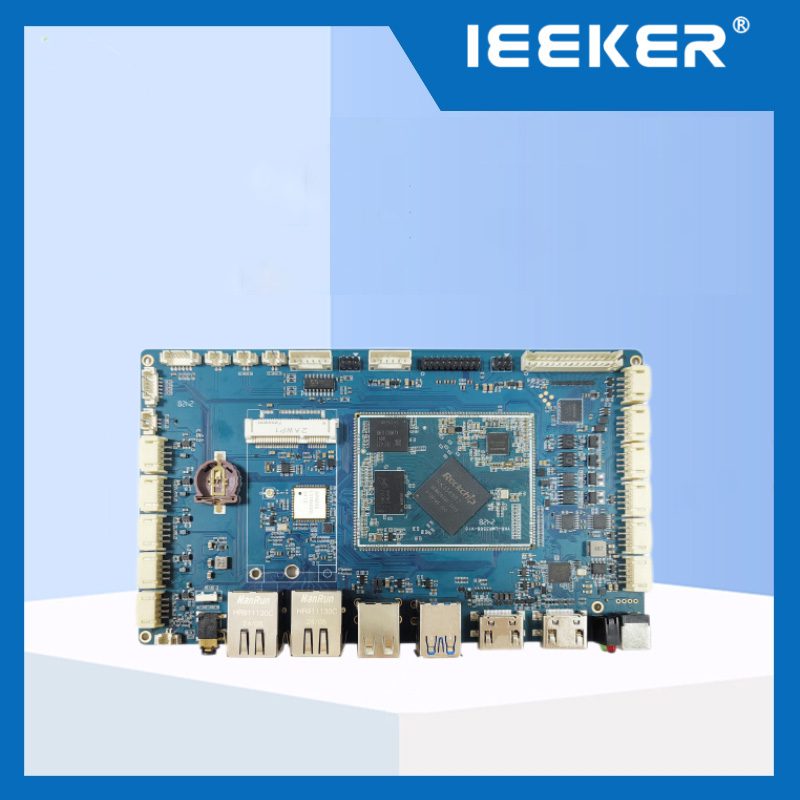
Unlike bare chips which demand full‑cycle peripheral circuit design, these boards integrate memory, eMMC storage, power management circuits, physical I/O interfaces and boot firmware. Engineers can skip repeated base‑hardware validation and jump straight into OS porting, driver debugging, AI model testing and prototype verification. For most industrial teams, rockchip development board serves as the critical bridge between chip evaluation and mass‑production custom SOM or PCBA solutions.
Mainstream Rockchip Development Board Models and Positioning
Rockchip’s product portfolio covers low‑power lightweight terminals all the way up to high‑performance edge‑AI computing hardware. Each series targets distinct cost and performance brackets.
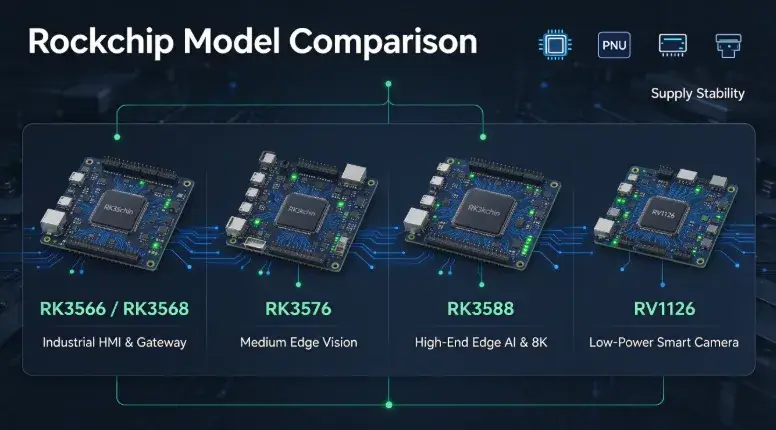
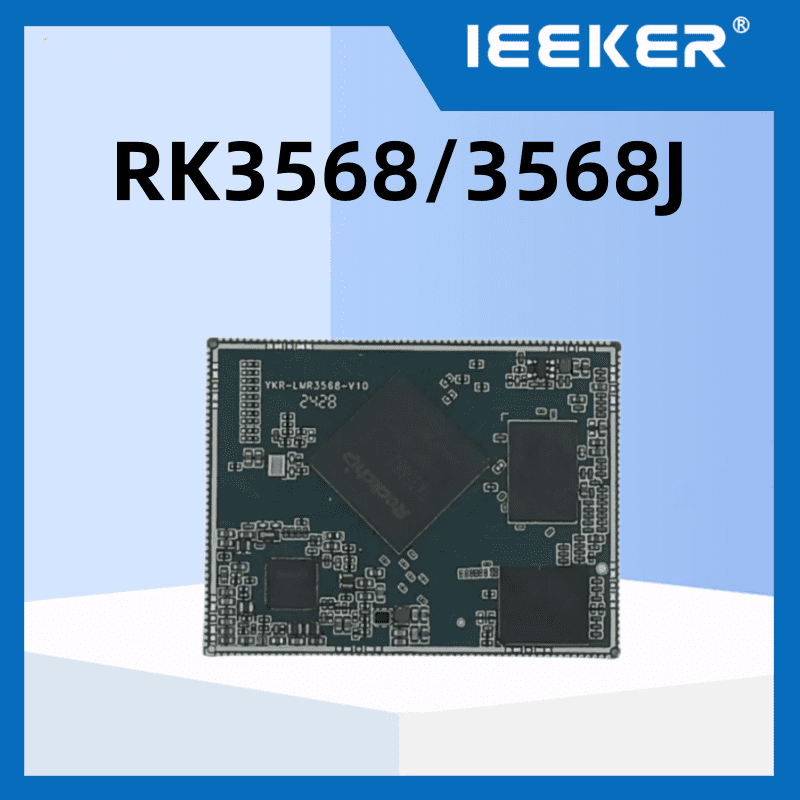
RK3566 & RK3568 board As mid‑range workhorse chips, RK3566 and RK3568 strike a good balance between power draw and computing capability. With mature SDK and long‑term chip supply support, they are widely deployed for industrial HMI panels, IoT gateways, video decoders and simple data acquisition terminals. Cost‑sensitive mass‑production projects frequently select these two chips to keep overall BOM under control.
RK3576 board The mid‑high‑tier RK3576 brings upgraded NPU inference performance and enhanced multimedia decoding capacity. It fits medium‑complexity machine‑vision tasks such as single‑channel object detection and real‑time video stream analysis. Updated kernel and tool‑chain also reduce software‑porting overhead for embedded developers.
RK3588 board RK3588 is Rockchip’s flagship high‑end SoC. Delivering up to 6 TOPS AI NPU performance, powerful GPU and octa‑core CPU cluster, this board handles 8K video processing, multi‑camera machine vision and heavy‑duty edge‑AI inference. It is the preferred rockchip development board for defect‑detection nodes, local edge computing boxes and high‑end robot control units. Naturally, higher performance comes with increased power consumption and component cost.
RK3399 and RV1126 boards RK3399 is a proven legacy generation chip with abundant open‑source community resources, still running in many existing industrial upgrade projects. RV1126 is a vision‑specialized low‑power SoC, designed for battery‑powered smart cameras and lightweight sensing terminals, rather than heavy multi‑channel analysis workloads.
Software Ecosystem: SDK Is Make‑or‑Break for Mass Production
Great hardware means little without stable software support, and this is where many embedded projects hit roadblocks. Official Rockchip SDK packages include Linux kernel, Android system source, device‑tree configuration files, NPU & GPU drivers, multimedia codec libraries and flashing utilities.
Nevertheless, official baseline SDK often requires further adaptation for custom carrier boards. Trusted hardware vendors such as IEEKER carry out secondary SDK tuning, fix peripheral compatibility bugs and deliver organized technical documentation. Solid SDK support shortens OS porting cycles and lowers engineering risk when moving from prototype to commercial manufacturing. Many failed embedded projects trace back to underestimated software workload, rather than raw CPU or NPU performance.
Typical Real‑World Applications for Rockchip Development Boards
Rockchip development boards cover diverse commercial fields beyond hobby‑level prototyping.
In industrial automation, RK3568‑based SOM and SBC hardware power HMI touch panels and on‑site data‑collection terminals, communicating with PLC, sensors and MES systems via RS485, CAN and Ethernet interfaces.
For edge AI and machine‑vision, RK3576 and RK3588 boards run local YOLO detection models for product defect inspection, safety monitoring and multi‑video‑stream analysis, removing reliance on remote cloud servers.
In digital signage and smart retail, Rockchip’s robust video decoding engine drives multi‑display advertising players and self‑service kiosk terminals. RV1126 hardware finds its place in low‑power access‑control cameras and battery‑operated IoT sensor nodes.
Of course, these boards are also popular among makers and university labs for embedded education and small‑robot prototyping, thanks to rich community tutorials.
Practical Tips: How to Choose the Right Rockchip Development Board
Many developers simply pick the highest‑spec rockchip development board by default, which leads to unnecessary cost and power waste. Several factors deserve careful evaluation.
First, match computing resources to actual workload. If your project only requires data collection and simple screen output, RK3566 or RK3568 board offers superior power‑efficiency and lower cost. For local AI inference, double‑check real NPU performance and framework compatibility inside SDK, not just marketing TOPS figures.
Second, audit physical interfaces. Industrial projects frequently demand RS485, CAN bus, multi‑lane MIPI‑CSI and 2.5G Ethernet. Confirm target carrier or SOM module exposes those required industrial I/O before purchasing samples.
Third, confirm chip lifecycle and vendor support. Industrial hardware usually needs 5‑7 years component supply. Chips like RK3568 enjoy long production cycles. Meanwhile, evaluate whether your board supplier can provide schematic reference, driver support and OEM / ODM customization service for later custom PCBA iteration.
Frequently Asked Questions
What can you do with a Rockchip development board?
A Rockchip development board is an embedded prototyping platform built around Rockchip ARM SoCs. Engineers test peripherals, port operating systems, validate AI algorithms and build functional prototypes before moving to mass‑production custom hardware. Use cases span industrial control, edge vision, digital signage and embedded research.
RK3568 vs RK3588: which rockchip development board suits industrial projects?
RK3568 is a cost‑effective mid‑range solution for HMI, gateway and basic display tasks with low‑to‑moderate power draw. RK3588 delivers powerful NPU and CPU performance for multi‑camera vision and heavy edge‑AI inference, but costs more and consumes more power. Your workload and budget should guide the final decision.
Can Rockchip boards replace Raspberry Pi for industrial deployment?
In many industrial scenarios they are viable alternatives. Rockchip‑based hardware commonly exposes richer industrial‑grade interfaces and benefits from longer chip supply cycles. Still, developers must verify SDK stability, driver quality and vendor technical support before large‑scale adoption.
Closing Thoughts
Rockchip development boards occupy a vital position in today’s ARM embedded ecosystem, balancing performance, software maturity and commercial availability. Whether you are evaluating RK3568 for cost‑sensitive terminals or RK3588 for demanding edge‑AI vision, always align hardware selection with real application requirements and fully assess SDK and vendor support early in your design cycle. Doing so helps teams avoid costly redesign work in later development phases.