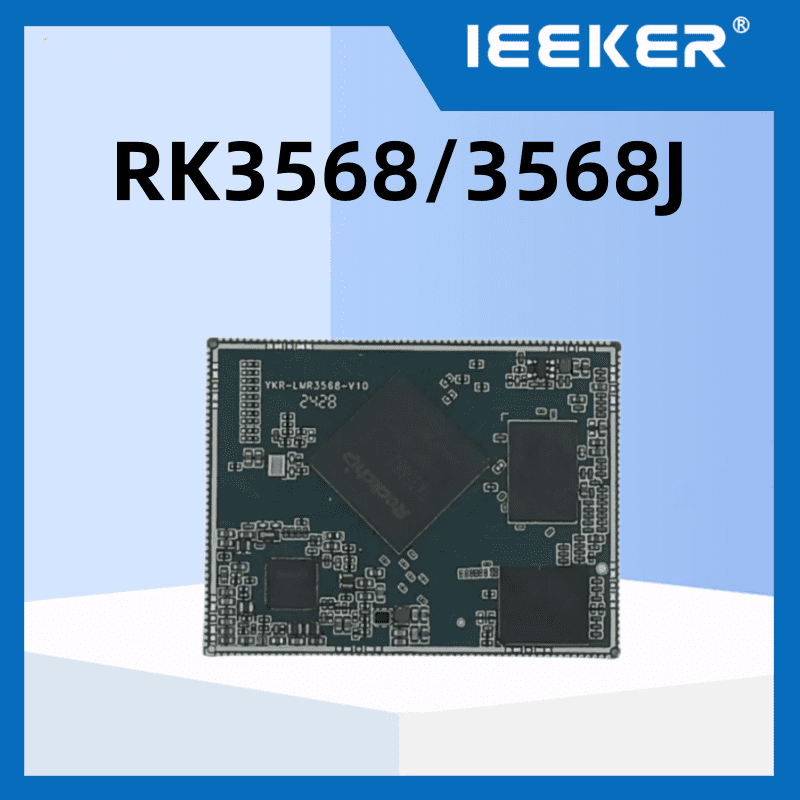
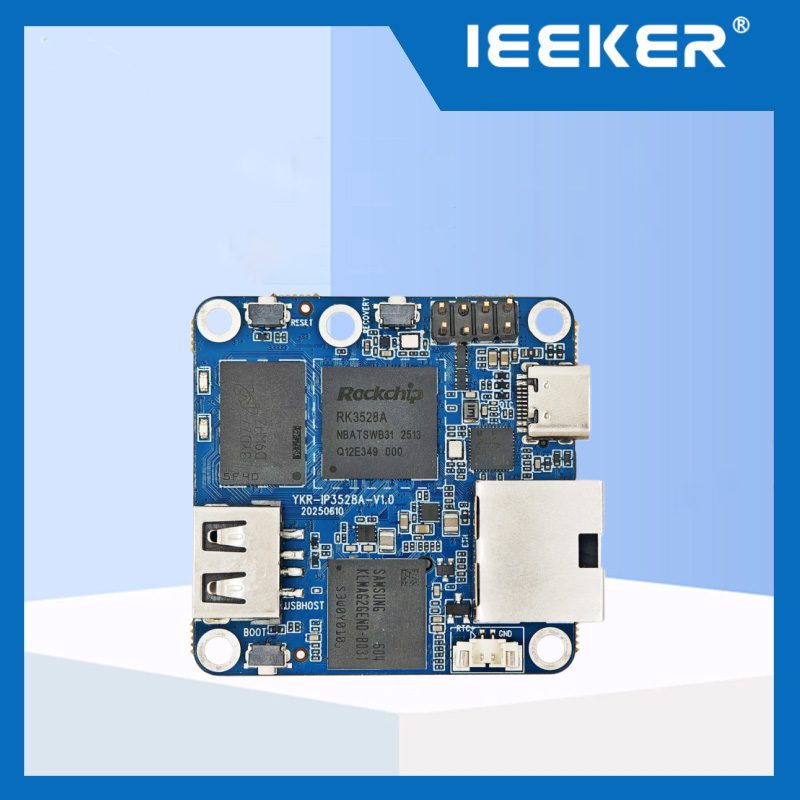
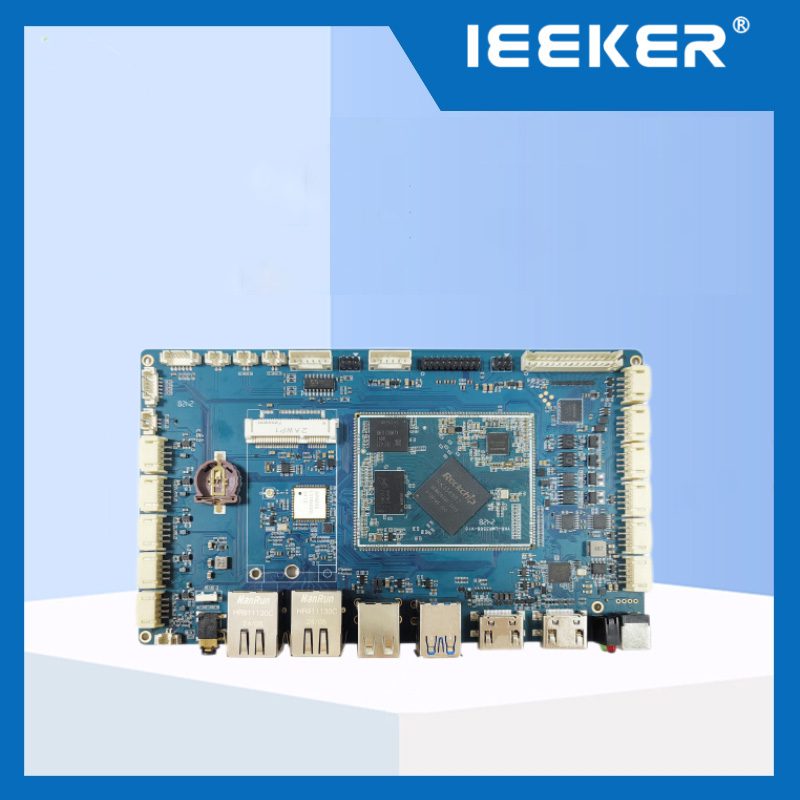
When industrial and embedded system developers need flexible hardware solutions for smart gateways, HMI panels, edge computing devices, and automation equipment, Rockchip board custom development becomes a reliable choice. Rockchip processors including RK3568, RK3576 and RK3588 deliver balanced performance, low power consumption and rich peripheral interfaces. Ieeker specializes in Rockchip single board computer customization, helping clients turn project requirements into stable, mass-producible embedded hardware.
Many project teams face challenges during custom board development. Some teams struggle to select the correct Rockchip chip model for their workload. Others meet obstacles in firmware adaptation, driver development and hardware revision. Without experienced embedded engineers, the whole development cycle may be extended and bring extra cost. This guide breaks down the full workflow of Rockchip board custom development, compares popular Rockchip chips, and answers common questions from industrial buyers and developers.
What Is Rockchip Board Custom Development
Rockchip board custom development refers to modifying or redesigning Rockchip based SBC, core board and SOM modules to match specific project requirements. Customization ranges from simple hardware interface modification to full carrier board design, system firmware tailoring and function expansion.
For different project stages, customization can be divided into several tiers. Minor customizations are based on existing off the shelf Rockchip boards. Engineers adjust interfaces, remove unused ports, add RS485, CAN bus or PoE modules, and customize the boot logo and pre installed software. Medium customization redesigns the carrier board while keeping the original Rockchip SOM core module. This is widely used for industrial HMI, smart control terminals and edge gateway products. Full custom development redesigns both core module and carrier board. This option suits high volume mass production projects with strict power, size and temperature requirements.
Compare Popular Rockchip Chips for Custom Development
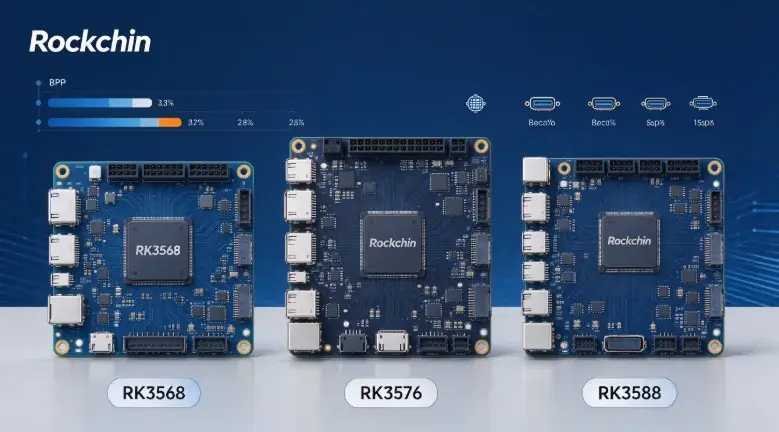
| Chip Model | Core Spec | Typical Use Case | Key Customization Advantage |
|---|---|---|---|
| RK3568 | Quad core A55, 2D GPU | Industrial gateway, low power HMI, data collection terminal | Mature SDK, stable driver, wide temperature support, low BOM cost |
| RK3576 | Octa core 4xA72+4xA53, 3D GPU | Mid range edge computing, multi screen industrial panel, video analytics | Strong multimedia decoding, rich interface, good balance of performance and power |
| RK3588 | Octa core 4xA76+4xA55, NPU 6TOPS | High end edge AI, 8K video processing, high performance industrial controller | Powerful NPU for AI inference, support multiple display outputs |
Selecting the right chip is the first critical step of Rockchip board custom development. If your project only needs data transmission and simple local control, RK3568 is cost effective. Projects requiring video stream processing and multi touch display can choose RK3576. For AI vision and heavy computing tasks, RK3588 will be the preferred option. Ieeker provides full SDK and technical documentation for all these Rockchip platforms, shortening the custom development cycle.
Full Workflow of Rockchip Board Custom Development
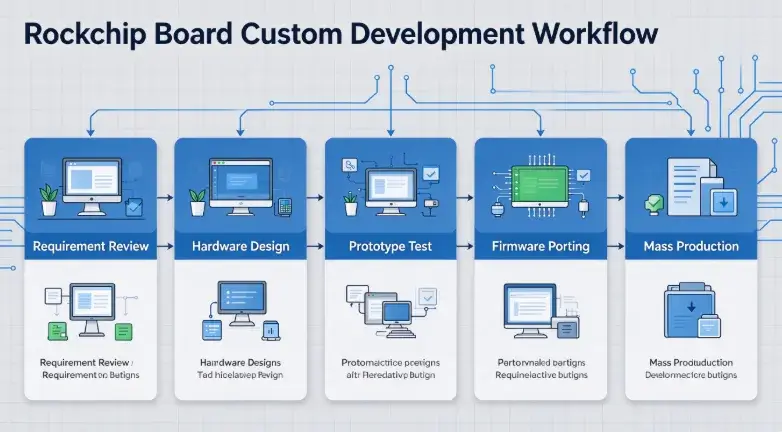
1. Requirement Confirmation and Scheme Evaluation
At this stage, the development team collects all technical specifications including power supply, operating temperature range, communication interfaces, display requirements, operating system and production volume. Engineers evaluate hardware feasibility, select suitable Rockchip chip and propose a development schedule. Clients will receive a detailed quotation and development timeline.
2. Hardware Schematic and PCB Design
After the scheme is confirmed, hardware engineers complete schematic design and PCB layout. For industrial projects, special attention is paid to anti interference design, EMC protection and thermal dissipation. The design files will be reviewed before prototype manufacturing.
3. Prototype Fabrication and Hardware Testing
Prototype boards are produced for hardware verification. Engineers test power stability, communication interfaces, voltage and temperature performance. Any hardware defects will be revised in this phase. Multiple rounds of prototype testing are usually needed for high reliability industrial products.
4. Firmware and Software Customization
This is a key part of Rockchip board custom development. The development team ports Linux or Android system, develops peripheral drivers, optimizes system boot speed, customizes system UI, and preloads client applications. Ieeker provides complete Rockchip SDK support, helping developers quickly adjust system functions.
5. System Integration, Validation and Mass Production Preparation
After hardware and software debugging, the whole board will go through long term aging test, high low temperature test and vibration test to ensure stability under industrial environment. Once validation passes, the team prepares production documents and transfers to mass manufacturing.
Key Factors to Consider Before Starting Custom Rockchip Board Projects
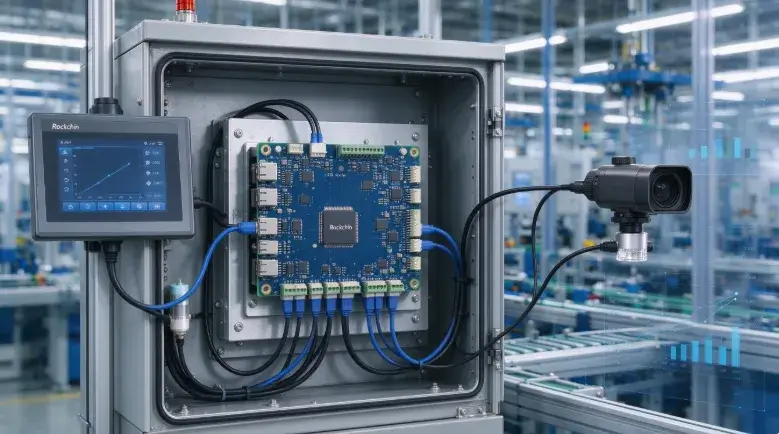
First, confirm your estimated production quantity. Small batch prototype projects usually adopt SOM plus custom carrier board solution to reduce cost. Large volume commercial projects can consider full custom core board design to optimize BOM cost.
Second, clarify operating environment requirements. Industrial devices often need wide temperature support from minus 40 degrees to 85 degrees Celsius. The hardware design and component selection must match this requirement.
Third, confirm software requirements. Android is more suitable for touch HMI devices with graphical interface. Linux is preferred for gateway and headless edge computing terminals. The SDK support status directly affects software development workload.
Fourth, evaluate long term supply continuity. Rockchip SOM modules have stable supply chain. Working with reliable supplier like ieeker helps avoid component shortage risks during long term product lifecycle.
FAQ
Q1 What is the minimum order quantity for Rockchip board custom development
A1 MOQ differs based on customization type. Simple firmware and interface modification support small batch orders. Full hardware redesign projects usually require higher quantity to cover non recurring engineering cost. Contact ieeker technical team to get a tailored solution according to your target volume.
Q2 How long does Rockchip board custom development normally take
A2 Simple customization based on existing boards takes around 2 to 4 weeks. Carrier board redesign plus software customization takes 2 to 3 months. Full custom core board development may take 4 to 6 months. The timeline depends on function complexity and testing requirements.
Q3 Does ieeker provide SDK and technical support for custom Rockchip boards
A3 Yes. Ieeker provides complete Rockchip SDK, source code, hardware schematic reference and technical documentation. Our embedded team offers continuous technical support during client secondary development.
Q4 Can custom Rockchip boards support industrial communication protocols such as CAN bus and RS485
A4 Absolutely. During the custom design phase, we can integrate CAN, RS485, RS232, PoE, Ethernet and other industrial interfaces according to your project needs.
Q5 What operating systems are supported on custom Rockchip boards
A5 Supported systems include Android and multiple Linux distributions. We can pre adapt the system and drivers for your selected Rockchip chip including RK3568, RK3576 and RK3588.
Closing
Rockchip board custom development helps industrial product developers build differentiated embedded hardware. Choosing the right Rockchip processor and reliable development partner can greatly reduce project risk and shorten time to market. Whether you need minor modification of existing SBC or full custom industrial board, ieeker’s Rockchip hardware and software team can deliver end to end customization service.