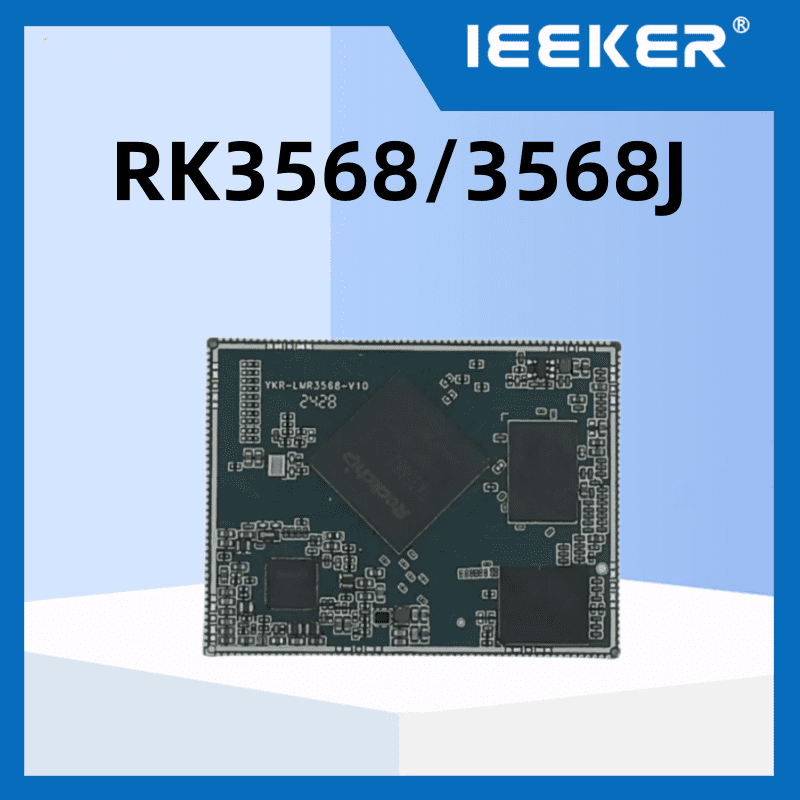
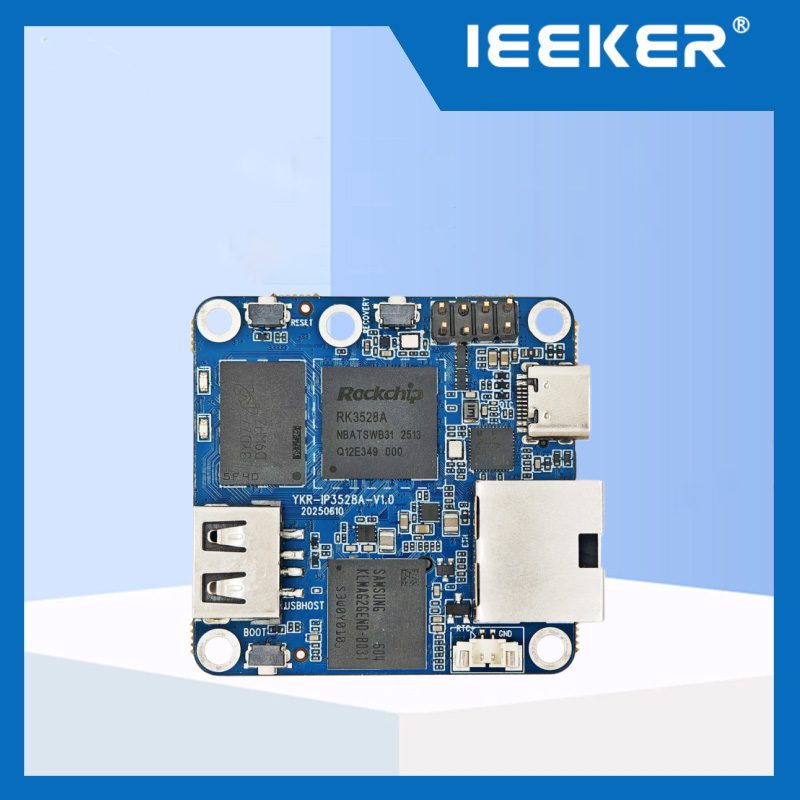
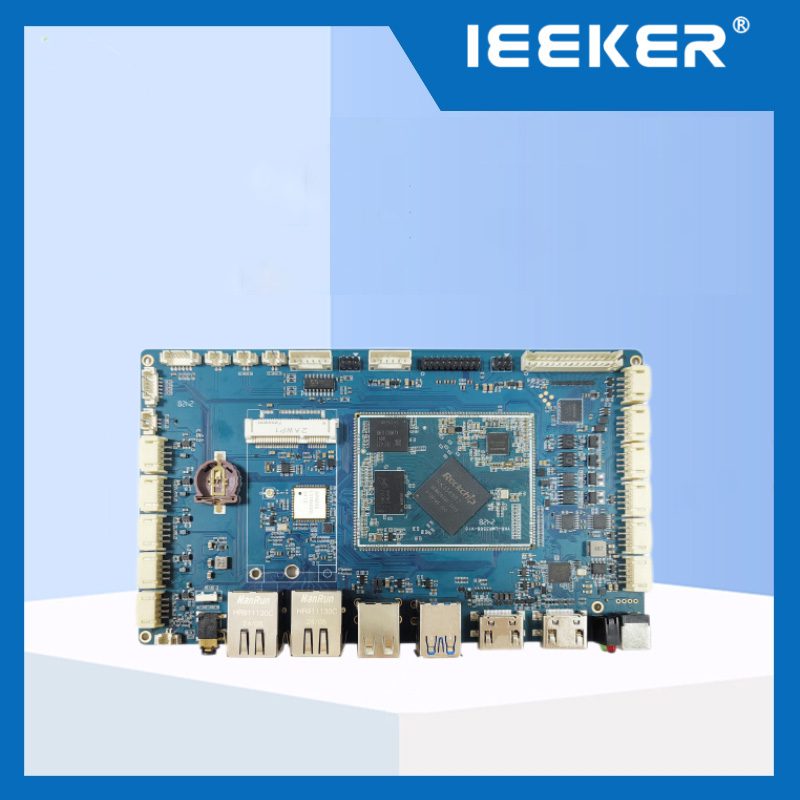
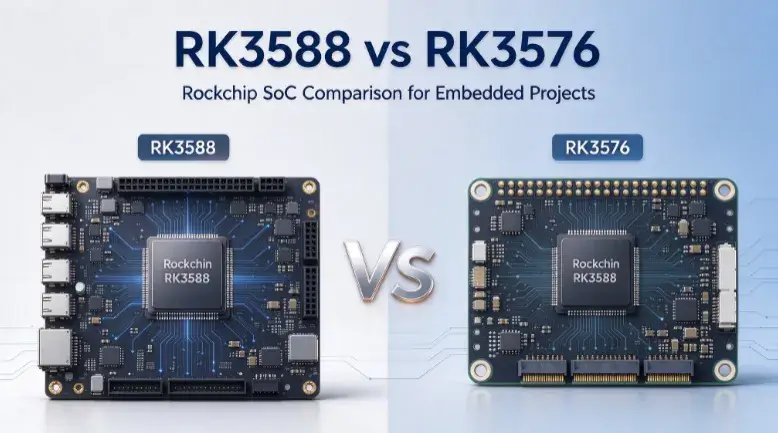
Embedded system designers frequently weigh Rockchip RK series processors when developing edge AI industrial devices single‑board computers and smart hardware. RK3588 and RK3576 stand out as two widely adopted system‑on‑chip options. Even though both chips target industrial and edge scenarios there are clear gaps in processing capability NPU performance cost and applicable project boundaries. This guide compares RK3588 versus RK3576 based on real‑world hardware testing official Rockchip documentation and practical engineering feedback to help developers make informed component selection decisions.
Core Hardware Specifications Comparison
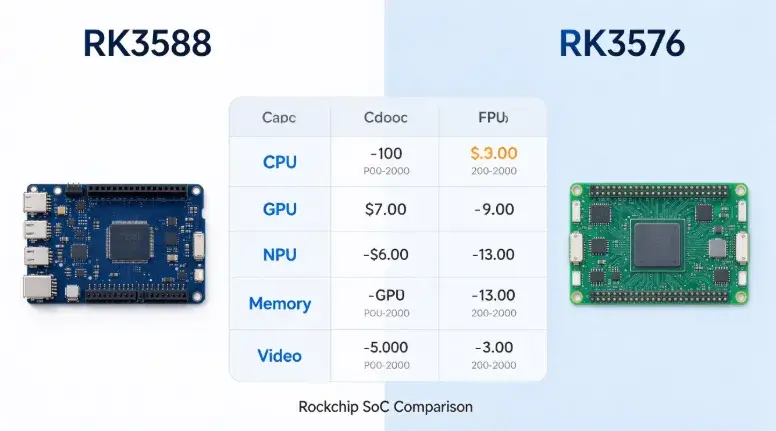
The table below lists key hardware parameters for RK3588 and RK3576, sourced from official Rockchip datasheets and actual SOM board test data.
| Item | RK3588 | RK3576 |
|---|---|---|
| CPU Architecture | 4×Cortex‑A76 + 4×Cortex‑A55 | 4×Cortex‑A55 + 4×Cortex‑A53 |
| GPU | Mali‑G610 MC4 | Mali‑G52 MC2 |
| NPU Computing Power | 6 TOPS INT8 | 8 TOPS INT8 |
| Maximum Memory Support | Up to 32GB LPDDR4X | Up to 16GB LPDDR4X |
| Video Decoding | 8K@60fps H.265, 4K@120fps | 4K@60fps multi‑channel decoding |
| Video Encoding | 8K@30fps | 4K@60fps |
| Process Technology | 8nm | 12nm |
| Typical Application Scenarios | High‑end edge AI multi‑camera vision high‑performance industrial controller | Cost‑sensitive edge gateway multi‑channel low‑power vision embedded display terminal |
From benchmark test results, RK3588 holds obvious advantages in general‑purpose CPU and GPU computing performance. Its large core A76 architecture delivers faster response for complex application logic graphic rendering and heavy multitasking. RK3576 adopts a full A55 plus A53 energy‑saving combination. It cannot match RK3588 for heavy load computing, yet it achieves balanced power consumption and cost. One notable point is that RK3576 reaches 8 TOPS NPU inference performance, higher than the 6 TOPS of RK3588, making it competitive for pure AI inference workloads.
Software SDK and Ecosystem Support
Good hardware performance cannot exert value without complete software support. Both RK3588 and RK3576 are supported by Rockchip official SDK. Most mainstream SOM board vendors such as ieeker maintain customized SDK branches for these two chips.
RK3588 has a longer market release cycle. The open‑source code base is more mature. It offers stable support for Android 12 Android 13 multiple Linux kernel versions Debian and Ubuntu desktop system builds. Community resources are abundant. Engineers can easily locate porting cases driver debugging notes and third‑party component adaptation documents on developer forums. Many industrial customers choose RK3588 for the reason of rich accumulated software resources which can shorten project development cycles.
RK3576 is a relatively newer product. Official SDK iterations are progressing steadily. It supports Android 13 and modern Linux kernels. Part of the driver modules continue to receive version updates. Most mainstream functions including NPU inference multimedia decoding and peripheral interfaces have been validated. Some niche peripheral adaptations still require secondary development work. When selecting RK3576, teams need to confirm SDK stability from the board supplier in advance especially for long‑lifecycle industrial projects.
Both chips integrate RKNN toolchain for AI model conversion and deployment. Developers can import models from TensorFlow PyTorch and ONNX. RK3576’s higher NPU theoretical computing power brings advantages when running multiple lightweight AI inference tasks simultaneously. But users need to pay attention that actual inference performance is also restricted by memory bandwidth software optimization and model quantization quality. Theoretical parameters do not equal real‑world running results.
Price and Practical Project Selection Guidance
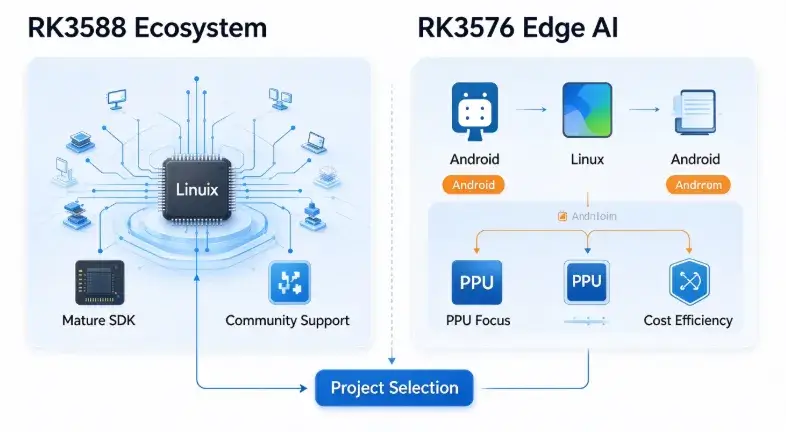
Cost is a non‑ignorable factor for mass‑production embedded projects. In terms of bulk unit price RK3576 and its corresponding core boards and development boards sit at a lower price tier compared to RK3588. If your project does not require 8K video output powerful GPU graphics processing or strong general‑purpose computing capacity RK3576 can cut overall BOM costs significantly.
Pick RK3588 for the following situations
- Projects requiring 8K video input output or high‑frame‑rate 4K graphic processing
- Devices running complex application software multi‑process concurrent work and GUI heavy load scenarios
- Projects demanding mature stable long‑term validated software ecosystem
Pick RK3576 for the following situations
- Cost‑sensitive edge AI gateways multi‑channel vision collection equipment
- Applications focusing primarily on AI inference without high requirements for CPU and GPU performance
- 4K level display and decoding requirements with expectation to control hardware expenses
Frequently Asked Questions
Q1 What are the main differences between RK3576 and RK3588
A1 RK3588 uses higher‑performance Cortex‑A76 large cores supporting 8K video and larger memory capacity with more mature software ecology. RK3576 features higher theoretical NPU computing power lower cost and lower power consumption. It is more suitable for cost‑controlled AI inference‑centric projects while lacking 8K capability and top‑tier general‑compute performance.
Q2 RK3576 vs RK3588 which one delivers better benchmark score
A2 RK3588 achieves higher scores in CPU GPU comprehensive benchmark testing. RK3576 shows advantages in pure NPU inference benchmark. Actual performance depends on your software optimization and project workload.
Q3 Is RK3576 NPU really stronger than RK3588
A3 On paper RK3576 reaches 8 TOPS INT8 versus 6 TOPS for RK3588. Real‑world inference speed will also be impacted by memory bandwidth driver optimization and model structure. It is recommended to complete actual sample testing before mass production instead of relying purely on datasheet parameters.
Q4 Should I choose RK3576 or RK3588 for mass‑production industrial projects
A4 If 8K video high‑performance GUI or complex multitasking is required go with RK3588. If the core demand is AI inference within 4K video range and you want to optimize cost RK3576 is a competitive alternative. It is critical to confirm SDK support and supply continuity from your hardware supplier.
Q5 Can software code be directly ported between RK3588 and RK3576
A5 The overall SDK framework is similar, yet CPU GPU NPU driver and multimedia modules differ. Direct compilation and operation cannot be achieved. Moderate porting and debugging work remains necessary.
Final Summary
RK3588 and RK3576 are not simply good versus bad options. They target different market positioning. RK3588 is the high‑end workhorse for Rockchip suitable for high‑spec industrial edge hardware with rich accumulated developer resources. RK3576 brings compelling NPU performance under controlled cost for cost‑focused AI embedded products.
Before finalizing component selection engineers should sort out clear project requirements including video specification computing load cost budget and software maintenance cycle. Whenever possible run actual validation on real development boards. Parameter comparison on paper can only serve as reference, and real hardware testing is the most reliable basis for decision‑making.