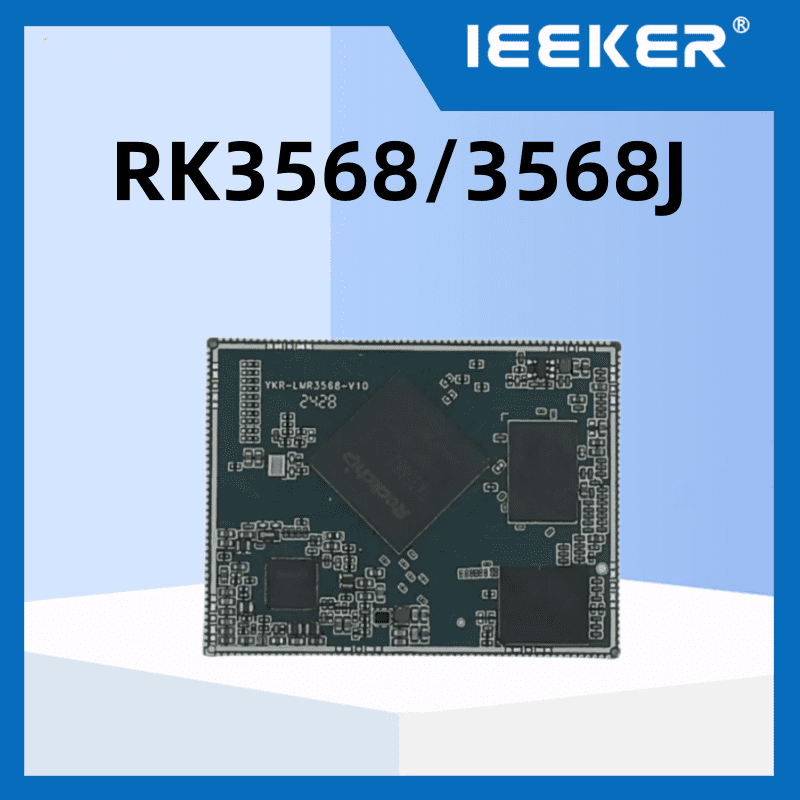
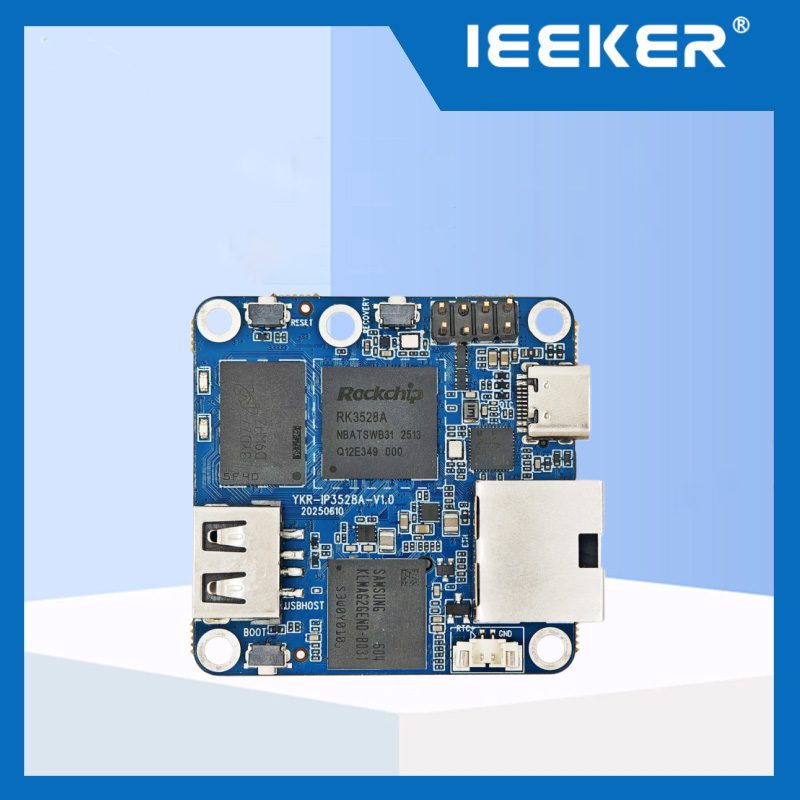
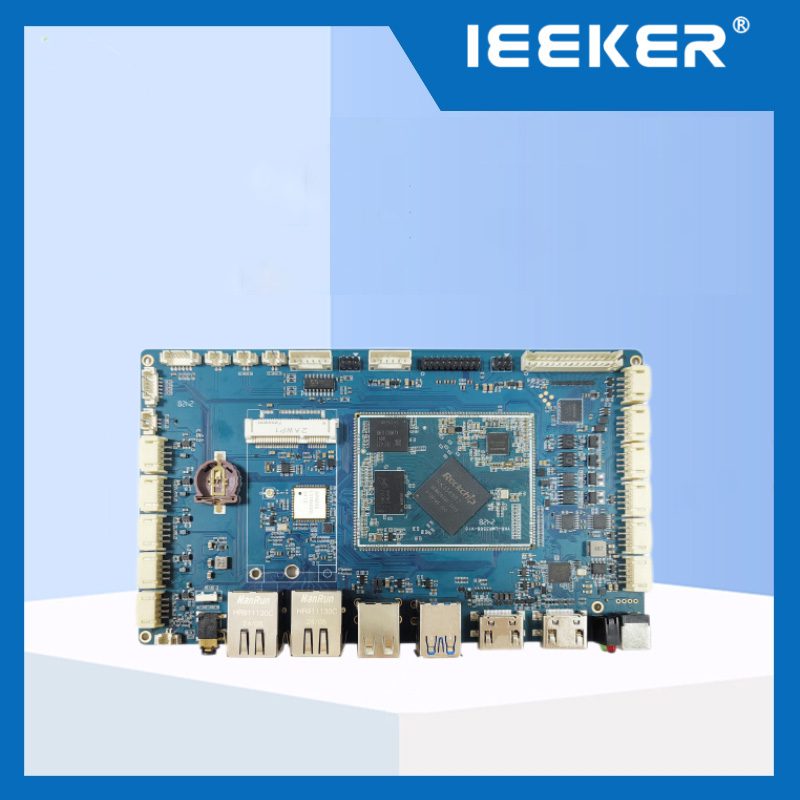
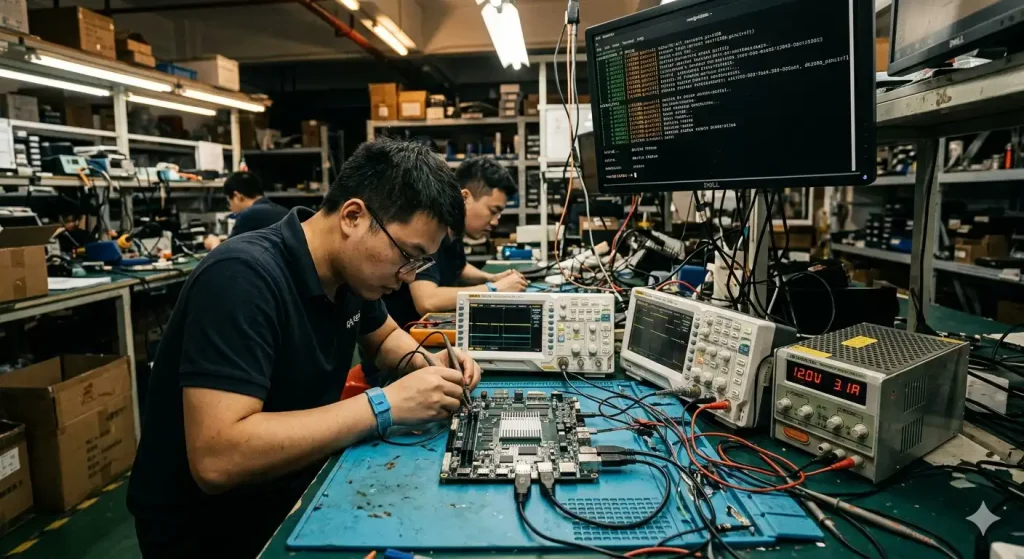
RK3588 development board is a high-performance ARM-based embedded platform featuring an 8-core CPU and dedicated NPU for AI workloads. It is widely used in edge AI, industrial automation, smart surveillance, and embedded computing systems. Compared with older platforms like RK3399 or Raspberry Pi 5, RK3588 delivers significantly higher AI inference performance and better multimedia processing capabilities, making it a leading choice for 2026 edge computing applications.
📌 Key Takeaways (Quick Summary)
- RK3588 uses a 4× Cortex-A76 + 4× Cortex-A55 architecture
- Integrated 6 TOPS AI NPU for edge inference
- Supports 8K video decoding and multiple display outputs
- Widely used in industrial automation, AI vision, IoT gateways
- Outperforms RK3399 and Raspberry Pi 5 in AI workloads
- Strong ecosystem support for Linux and Android development
- Ideal for custom embedded and OEM/ODM projects
1. What is RK3588 Development Board?
RK3588 is a next-generation system-on-chip (SoC) developed by Rockchip for high-performance embedded and AI computing applications. Unlike traditional embedded processors, it combines high-performance Cortex-A76 cores with energy-efficient Cortex-A55 cores, which allows systems to balance performance and power consumption dynamically.
In contrast to simpler single-board computers, RK3588 development boards are designed for industrial-grade deployment scenarios. Moreover, they are widely used in edge AI systems, smart devices, and embedded control platforms.
From an architectural perspective, heterogeneous computing has become a major trend in modern embedded design. According to ARM’s official documentation , combining different CPU core types improves scheduling efficiency and energy optimization. As a result, RK3588 is increasingly adopted in industrial AI systems where both performance and stability are required.
In addition, embedded system designers prefer RK3588 because it supports long-term deployment and flexible hardware integration. Therefore, it is not just a development board, but a scalable computing platform for industrial applications.
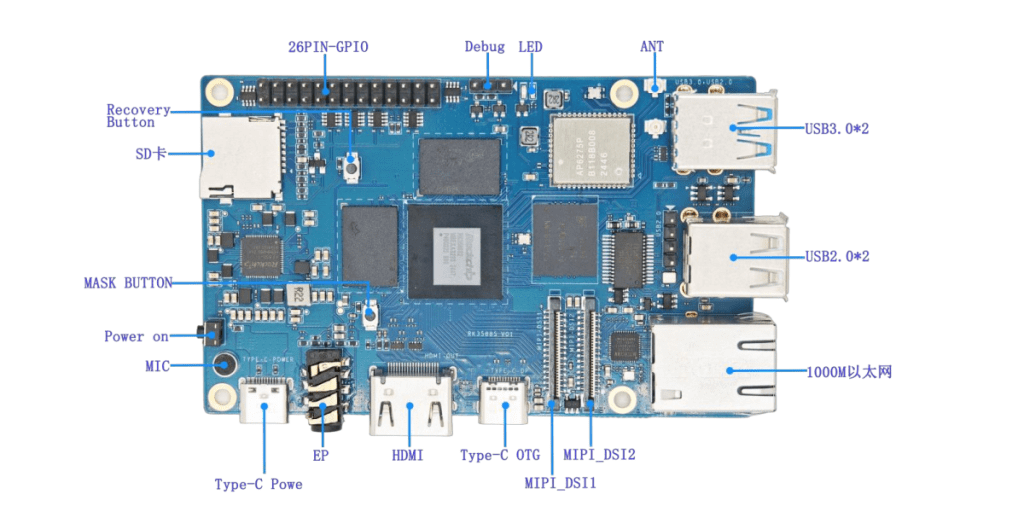
2. Key Technical Features of RK3588
RK3588 integrates CPU, GPU, and AI acceleration units into a single SoC, which significantly improves system efficiency in embedded workloads.
📊 Core Specifications Overview
| Feature | Specification |
|---|---|
| CPU | 4× Cortex-A76 + 4× Cortex-A55 |
| GPU | ARM Mali-G610 |
| AI NPU | Up to 6 TOPS |
| Video | 8K@60fps decoding |
| Memory | LPDDR4/LPDDR5 support |
| Storage | eMMC / NVMe / SATA |
| Interfaces | PCIe 3.0, USB 3.1, HDMI 2.1 |
Compared with RK3399, RK3588 introduces a dedicated Neural Processing Unit (NPU). This improvement significantly reduces CPU workload during AI inference tasks. Moreover, it enables real-time processing of complex AI models directly on the device.
According to IEEE embedded AI research, hardware-based AI acceleration plays a critical role in reducing latency and improving inference efficiency. Therefore, RK3588 is particularly suitable for edge computing applications that require real-time decision-making.
In addition, the support for high-speed interfaces such as PCIe 3.0 and HDMI 2.1 further enhances its usability in multimedia and industrial environments.
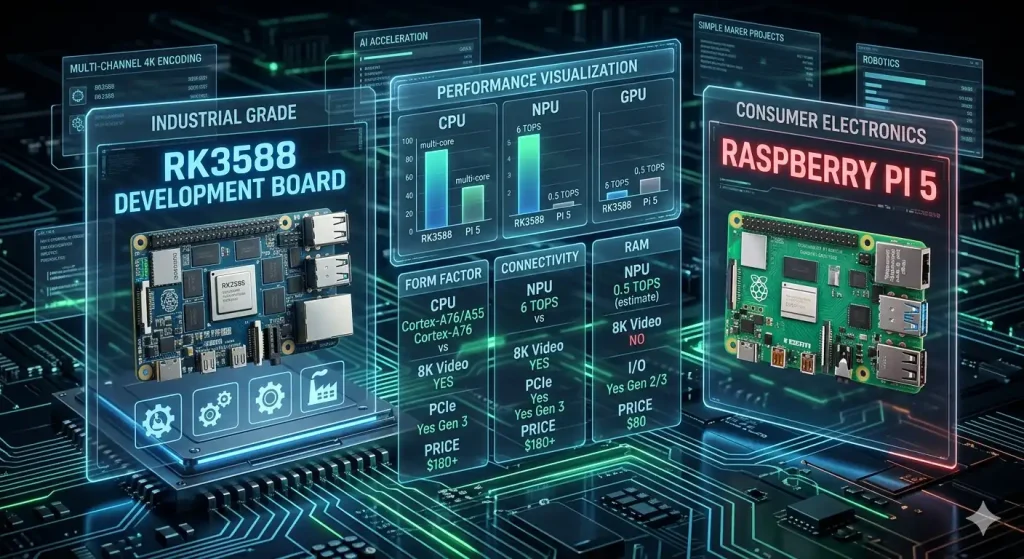
3. RK3588 vs Other Embedded Platforms
Selecting an embedded platform depends heavily on performance requirements, AI capability, and long-term deployment stability.
📊 Comparison Table
| Platform | CPU Architecture | AI Acceleration | Typical Use Case |
|---|---|---|---|
| RK3588 | A76 + A55 | 6 TOPS NPU | Edge AI / Industrial |
| RK3399 | A72 + A53 | None | General embedded |
| Raspberry Pi 5 | Cortex-A76 | None (no dedicated NPU) | Education / prototyping |
Raspberry Pi 5 remains a popular platform for education and prototyping, but its design prioritizes accessibility over industrial performance. According to Raspberry Pi Foundation documentation, the platform is optimized for learning and development rather than production-grade AI workloads.
In contrast, RK3588 is designed specifically for embedded systems requiring real-time AI processing, making it more suitable for industrial and commercial deployment scenarios.
4. RK3588 for Edge AI Applications
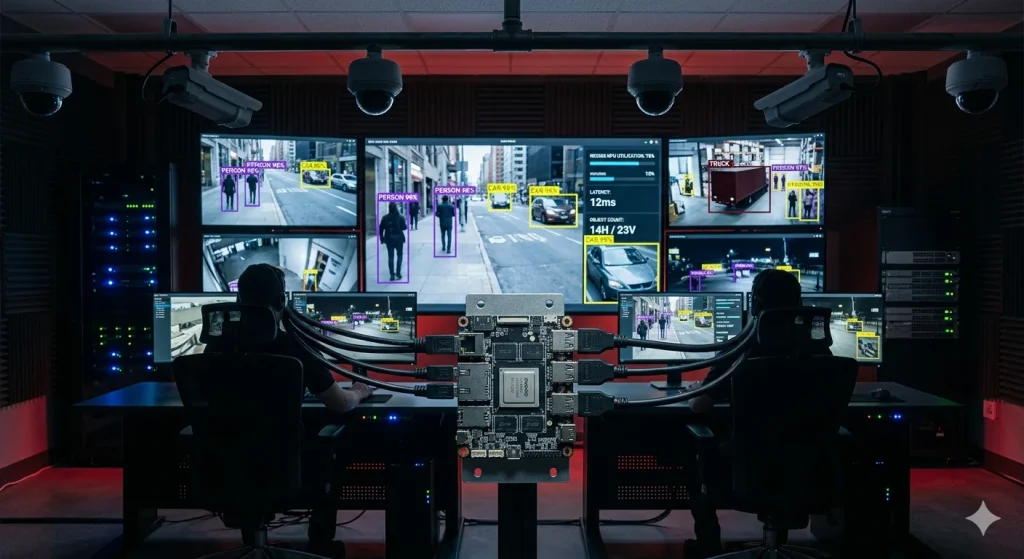
RK3588 has become a widely adopted solution in edge AI due to its integrated NPU and efficient compute architecture.
Typical applications include:
- Intelligent video surveillance systems
- Industrial machine vision inspection
- Autonomous robotics control systems
- Smart retail and kiosk platforms
- Real-time object detection systems
According to the MarketsandMarkets Edge AI Report (2025) , edge AI adoption is accelerating due to increasing demand for low-latency processing, data privacy requirements, and reduced dependency on cloud infrastructure.
RK3588 fits directly into this trend by enabling on-device inference, eliminating the need for constant cloud communication and reducing system latency significantly in real-time applications.
5. RK3588 in Industrial Embedded Systems
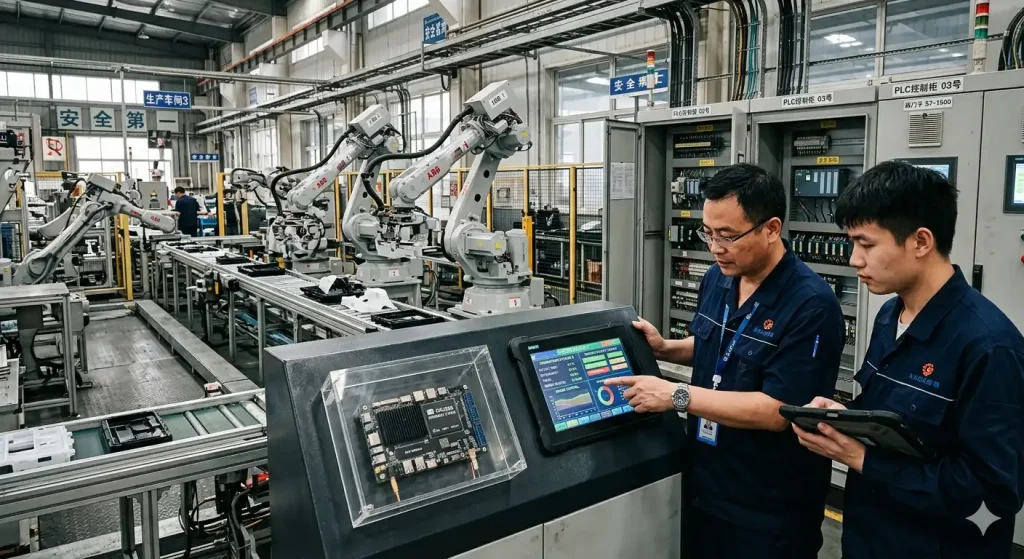
In industrial environments, embedded systems must meet strict requirements for stability, reliability, and long-term availability.
RK3588-based platforms are widely deployed in:
- Industrial automation systems
- Human-machine interface (HMI) terminals
- Edge data gateways
- Smart factory control units
Compared with consumer-grade SBCs, industrial RK3588 solutions typically include extended temperature support, enhanced electromagnetic interference (EMI) protection, and long lifecycle supply guarantees.
According to IEC industrial computing standards, industrial embedded systems must be designed for high reliability under continuous operation and harsh environmental conditions. RK3588-based boards are increasingly aligned with these requirements, making them suitable for mission-critical deployments.
6. Recommended RK3588 Embedded Solution
When selecting an RK3588 platform for industrial or commercial use, key considerations include thermal design, I/O scalability, software support, and supply chain stability.
👉 Recommended platform:
RK3588 Embedded SBC Board
This solution is designed for industrial embedded deployment and supports Linux and Android customization, as well as OEM/ODM-level hardware and software adaptation.
7. RK3588 Development Workflow
Step-by-Step Development Process
- Define application scenario (AI / industrial / IoT)
- Select hardware configuration (RAM, storage, interfaces)
- Install operating system (Linux or Android)
- Configure BSP and hardware drivers
- Deploy AI frameworks (TensorFlow / PyTorch Lite)
- Optimize performance and power consumption
- Prepare for mass production deployment
This workflow reflects standard embedded system engineering practices widely adopted in Linux-based development environments, as documented by the Linux Foundation.
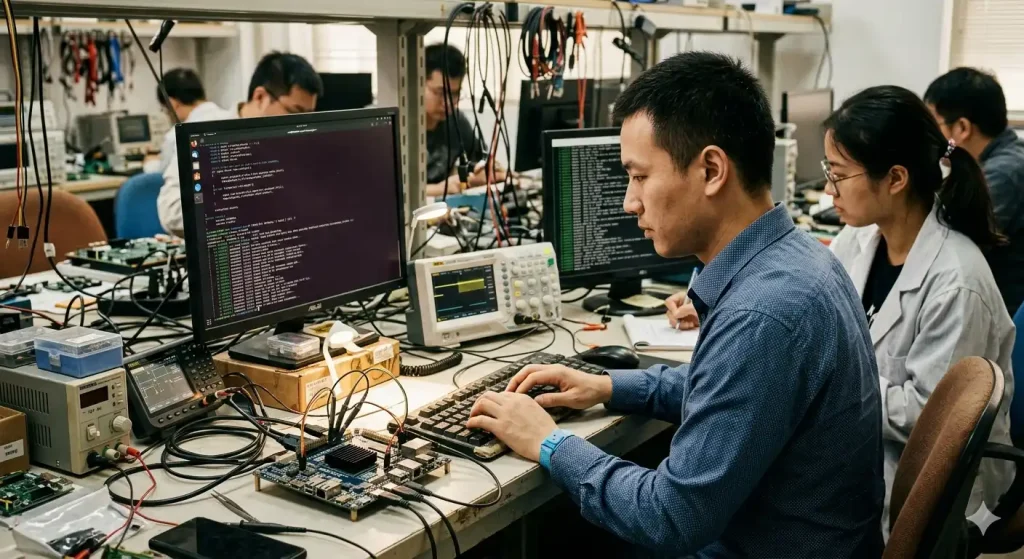
8. RK3588 vs RK3399 Edge AI Performance
RK3588 vs RK3399 Edge AI Performance
RK3588 significantly improves AI inference performance compared to RK3399 due to its dedicated NPU architecture and increased memory bandwidth.
RK3399 relies on CPU and GPU for AI-related tasks, which increases processing latency. RK3588 offloads these computations to hardware accelerators, improving efficiency and reducing system load.
This architectural shift is consistent with modern embedded AI trends where dedicated inference hardware is becoming a standard requirement for production-grade systems.
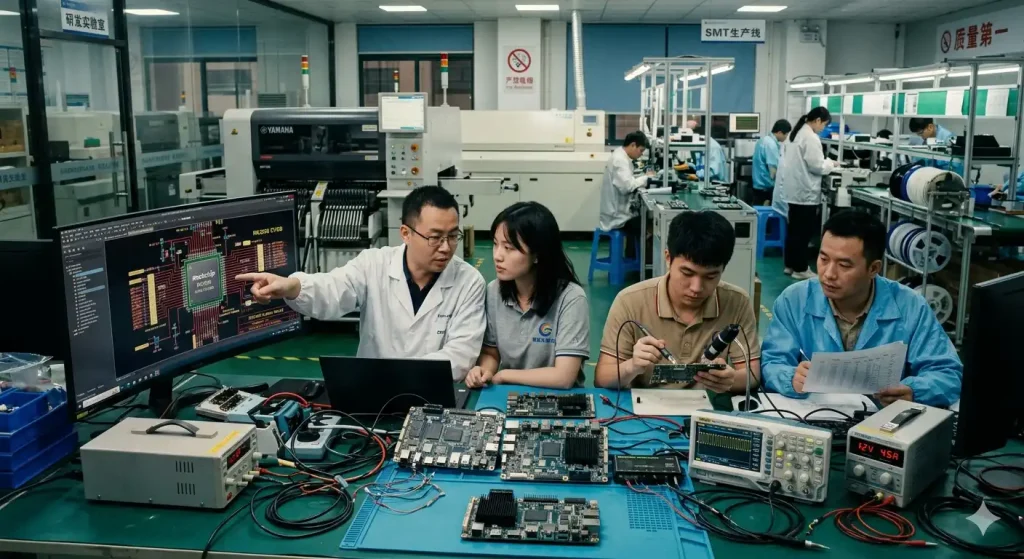
9. Custom Embedded Development Capability
RK3588 platforms are widely used in custom embedded system development for OEM and ODM projects.
Custom Development Board Design Guide
Common customization options include:
- Hardware interface redesign (USB, PCIe, MIPI)
- Operating system customization (Linux / Android)
- Thermal and power optimization
- AI model integration and acceleration tuning
These capabilities make RK3588 suitable for both prototype development and mass production environments.
FAQ
What is RK3588 used for?
RK3588 is used in edge AI systems, industrial automation, embedded computing, and intelligent devices.
Is RK3588 better than Raspberry Pi 5?
For AI and industrial applications, RK3588 provides significantly higher performance due to its dedicated NPU and industrial-oriented design.
Does RK3588 support AI workloads?
Yes, RK3588 includes a 6 TOPS NPU designed specifically for AI inference tasks.
Can RK3588 run Linux?
Yes, RK3588 supports multiple Linux distributions and Android systems.
Is RK3588 suitable for industrial use?
Yes, it is widely used in industrial automation and embedded control systems due to its stability and performance.