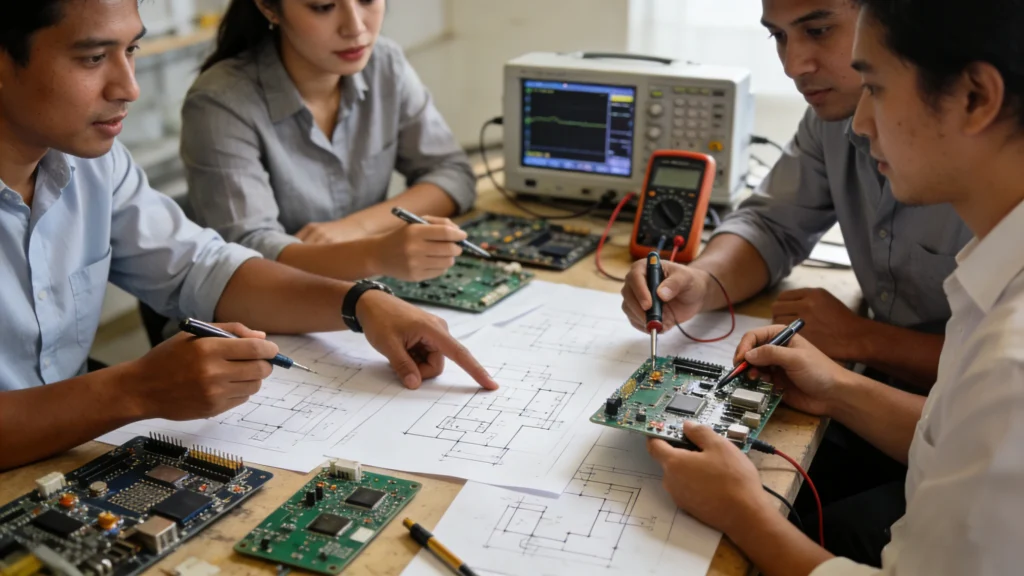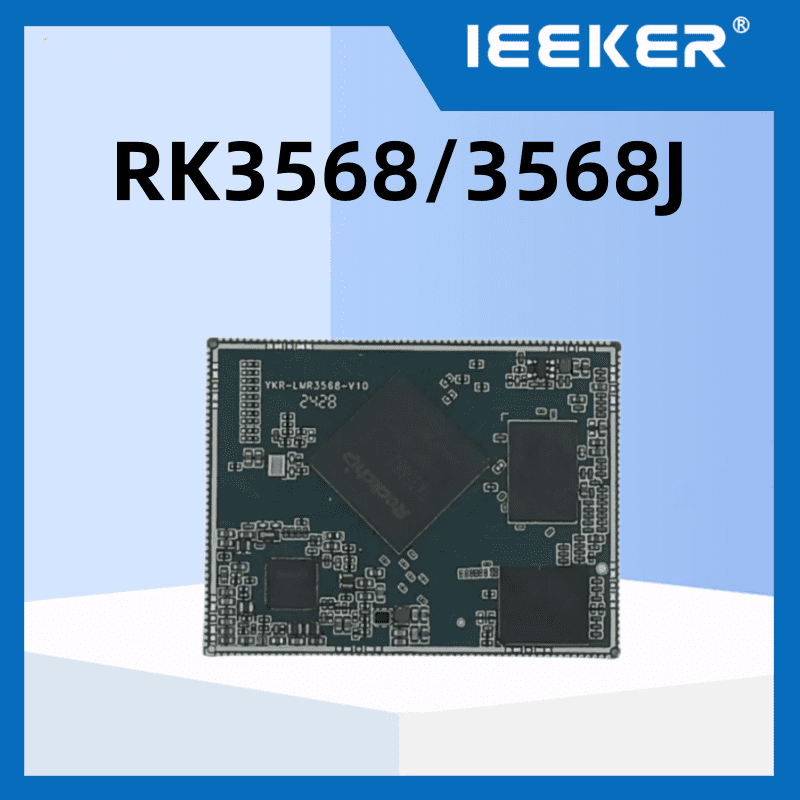
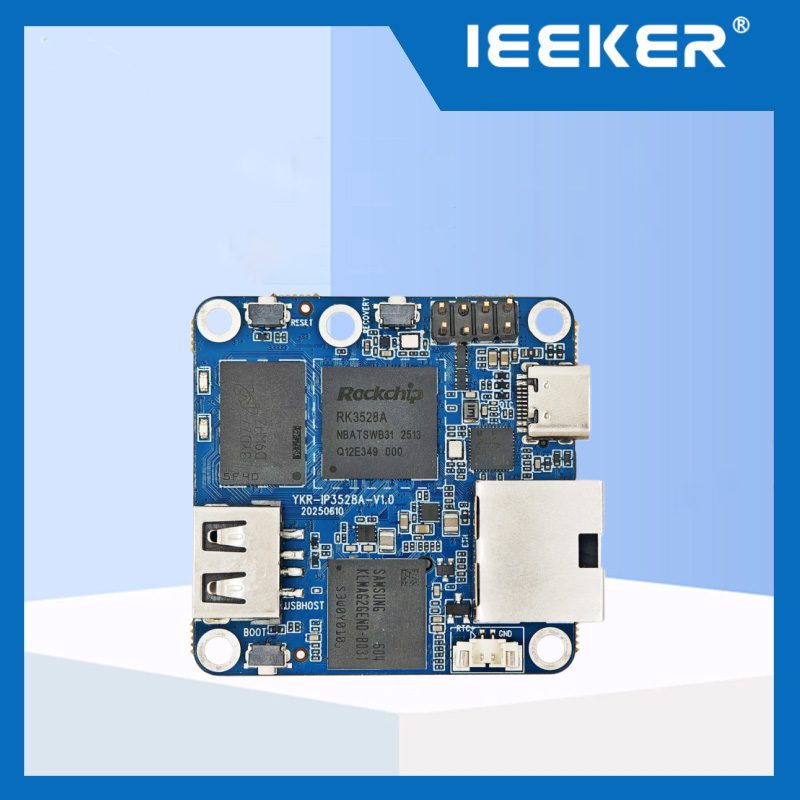
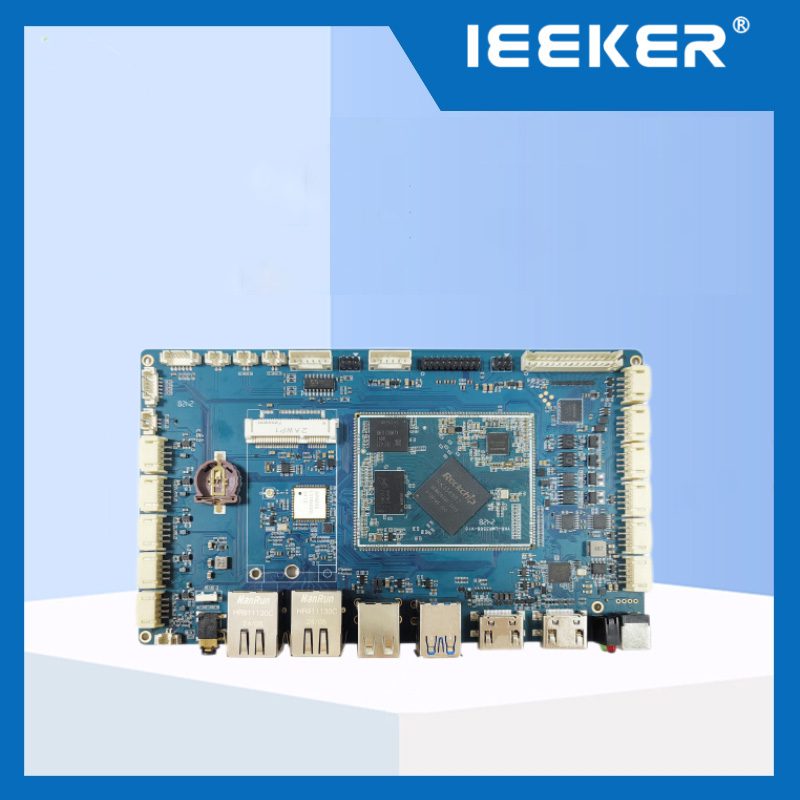
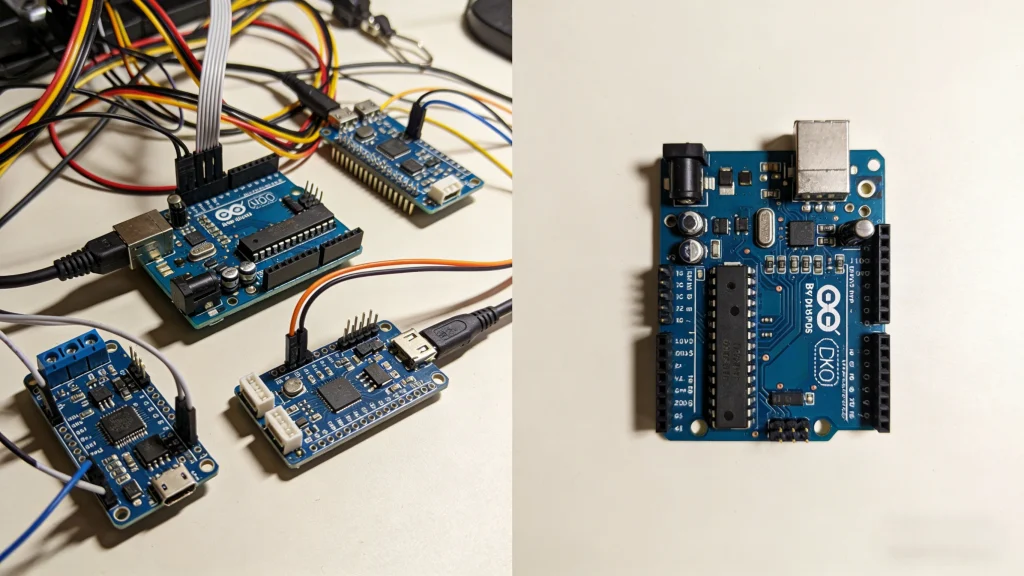
In the process of electronic device R&D and mass production, developers and business managers often face a classic dilemma: Should you use an off-the-shelf development board like an Arduino or Raspberry Pi for quick validation, or should you invest in developing a custom board tailored to your product?
Standard development boards, with their plug-and-play nature, have an irreplaceable advantage in the prototyping phase. However, when a product moves toward mass production and commercialization, a custom development board becomes the necessary choice to solve the “fit shortcomings” of standard boards and build a product’s core competitiveness .
This article will analyze the strategic value of choosing a custom development board from six core dimensions, helping your team make a more informed hardware decision.
1. Precise Function Matching: Say Goodbye to “Feature Bloat” and “Missing Features”
The design philosophy of a standard development board is to be “comprehensive and all-inclusive.” To cater to a wide range of learners and developers, these boards often integrate numerous interfaces (e.g., HDMI, VGA), debug ports, and expansion headers. However, in a real product, these features are often redundant.
The advantage of a custom development board lies in “tailoring and integration on demand”:
Eliminate Redundancy, Reduce Complexity: Take a simple IoT temperature and humidity sensor as an example. It only requires an “MCU + sensor interface + LoRa module + power management.” A custom board can strip away the unnecessary components, which not only saves space but also reduces the potential failure points associated with unrelated parts.
Integrate Dedicated Functionality: If your product requires industrial-grade 485 bus communication, high-precision 16-bit ADCs, or national encryption chips, a custom board can integrate these functions directly onto the mainboard. This eliminates the need for external modules or “shield” boards, thus avoiding compatibility issues.
2. Adapting to Product Form Factor: Overcoming Physical Size and Structural Limitations
Standardized boards (like the 76×53mm Arduino Uno) are difficult to fit into smartwatches, sensor probes, or slim remote controls. Modern electronic products demand极致 (ultimate) industrial design and space efficiency, imposing strict requirements on the size and mounting method of the circuit board.
Custom development boards enable:
Extreme Miniaturization: A wearable device’s internal space might only allow for a 10×20mm circuit board. This is only achievable through custom design, utilizing ultra-small package components (e.g., 0201 resistors/capacitors, QFN-packaged MCUs).
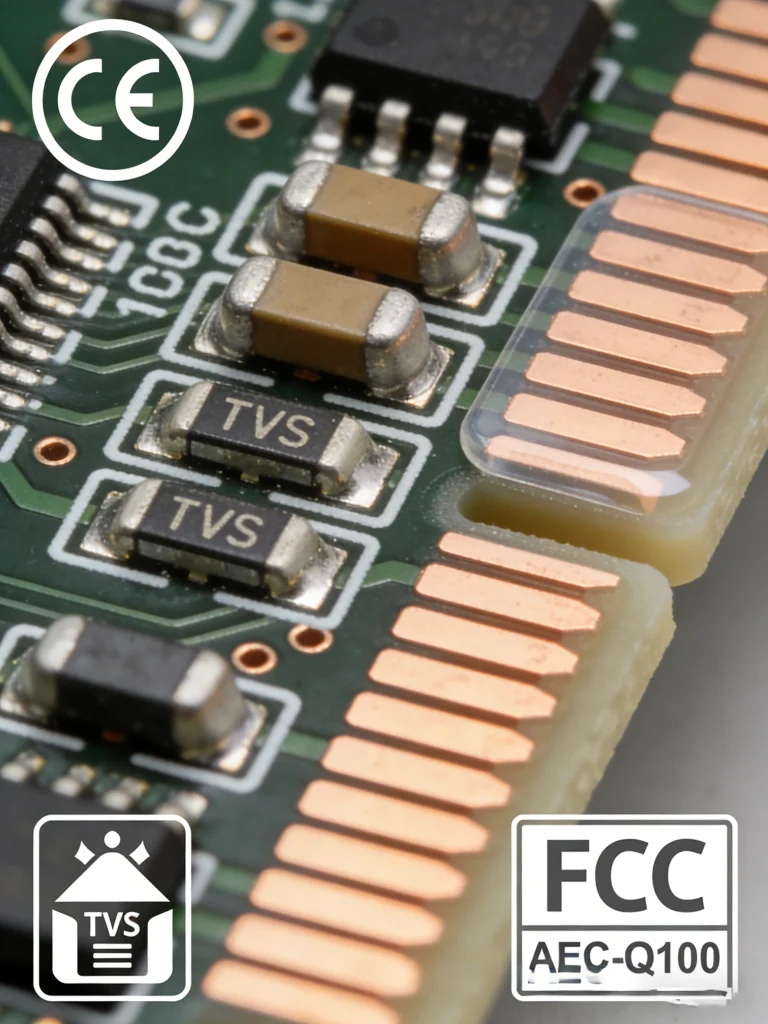
Specialized Environmental Adaptation: Industrial environments may require DIN rail mounting and vibration resistance; automotive electronics must withstand high temperatures and shock. Custom boards can be designed with dedicated mounting holes, use automotive-grade components (meeting AEC-Q100 standards), and reinforce the PCB material to perform reliably in harsh conditions.
3. Optimizing Performance and Stability: Meeting Industry-Specific Requirements
While the “general-purpose” design of standard boards is sufficient for consumer-grade applications, they often fall short in high-interference or high-precision scenarios like industrial control or medical electronics.
Through customization, you can specifically enhance:
High-Performance Computing & Signal Processing: Industrial motor control demands high-frequency real-time data processing (e.g., using an STM32H7 with a 480MHz main frequency), and medical ECG monitoring requires low-noise operational amplifiers and high-precision ADCs. Custom development allows you to freely select components and optimize the circuit layout to shorten signal paths and reduce latency.
High Stability & Noise Immunity: For outdoor or high-EMI environments, custom boards can incorporate dedicated EMC filtering circuits (e.g., common mode chokes, TVS diodes), ground shielding layers, and conformal coating to protect against moisture and salt spray. This ensures stable operation in extreme temperatures ranging from -40°C to 85°C.
4. Controlling Mass Production Costs: Achieving True Cost-Effectiveness
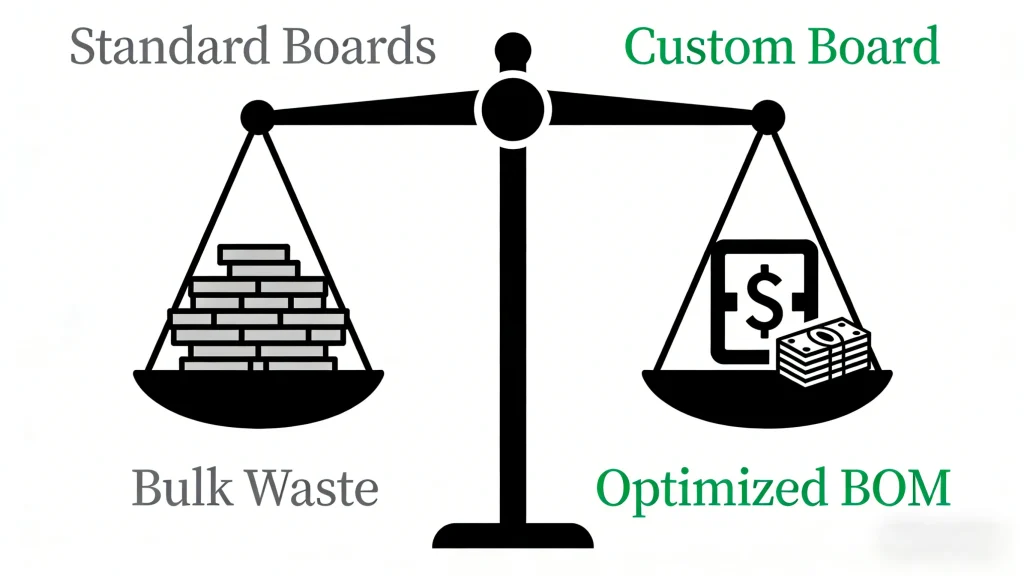
This is the core business logic driving companies toward customization. Although custom development involves a one-time Non-Recurring Engineering (NRE) cost, its cost advantages become exponential as you enter volume production.
Cost optimization manifests in three areas:
Hardware BOM Cost Reduction: Standard boards contain many unused functions and a high component count. With a custom design, you can significantly lower the per-unit cost by choosing cost-effective alternative chips (like domestic options), reducing the number of components, and optimizing the PCB layer count (e.g., reducing from 4 layers to 2 layers). The larger the production volume, the more significant the profit margin savings.
Improved Production Efficiency: Standard boards often require additional manual soldering of modules or modifications to fit the product enclosure. A custom board integrates all necessary functions perfectly and is designed for automated SMT assembly lines. This minimizes manual intervention, potentially scaling daily production capacity from thousands to tens of thousands of units.
Lower After-Sales Service Costs: Custom boards have fewer potential failure points and can include reserved interfaces for remote debugging. This allows for remote troubleshooting without the need for on-site disassembly, significantly reducing post-sale maintenance costs.
5. Building a Competitive Moat: Achieving Product Differentiation
In crowded markets like smart home and consumer electronics, product homogenization is rampant. The “standardized” nature of off-the-shelf boards makes it difficult to establish unique selling points.
Custom development boards are a powerful tool for building technical barriers:
Implementing Proprietary Features: For example, developing a smart lock with UWB (Ultra-Wideband) precision positioning. Only a custom board can deeply integrate the UWB chip, the lock driver circuit, and the encryption module to achieve a unique feature like “centimeter-level unlocking,” setting it apart from standard Bluetooth locks.
Intellectual Property Protection: Unique hardware circuit designs and PCB layouts can be patented. Deep software-hardware integration (e.g., using a private communication protocol) effectively prevents rapid cloning by competitors, protecting your company’s core technology.
6. Meeting Industry Compliance: Avoiding Certification Pitfalls
Industries like medical, automotive, and aerospace have stringent entry requirements and strict compliance certifications (e.g., medical ISO 13485, automotive AEC-Q100). Standard development boards are typically not designed with these standards in mind. Using them directly can lead to costly and time-consuming failures during the final product certification stage.
Custom development boards ensure compliance from the start:
Component Compliance: The design phase can mandate the use of components that are FDA-approved or AEC-Q100 certified.
Circuit Design Compliance: You can design isolation circuits to prevent leakage currents for medical devices, and over-voltage/over-current protection for automotive electronics. This ensures the final product passes EMC, safety, and other regulatory tests on the first attempt, paving a smooth path to market.
The Custom Development Process and Its Challenges
Of course, custom development isn’t a simple task. It typically involves several key stages: Requirements Analysis, System Architecture Design, Hardware (Schematic/PCB) Design, Prototyping, Debugging & Testing, Documentation, and Volume Production .
This process requires specialized hardware design expertise, supply chain management skills, and experience in Design for Manufacturing (DFM). Therefore, choosing a reliable hardware customization partner is critical.
Conclusion: Customization is the Path to Productization
Standard development boards are bridges for learning, while custom development boards are vehicles for commerce.
When your project needs to evolve from a “lab prototype” to a “market-ready product,” choosing a custom board is not just about cost optimization; it’s about perfectly aligning the function, form, performance, and compliance of your hardware with your business vision.
IEEKER specializes in providing one-stop custom development board services, from hardware design and PCB prototyping to mass production. Whether you need a low-power IoT node or a high-performance industrial controller, we can help you precisely match your requirements and build the core hardware that gives you a competitive edge.
Every successful hardware product starts with a perfectly tailored “heart.” If you’re planning your next innovation but have questions about component selection or PCB design, let’s talk.
Click the link below to connect with an ieeker technical consultant. Based on your project stage—from prototype validation to mass production ramp-up—we’ll provide a free feasibility assessment and an optimized cost model for your custom board.