
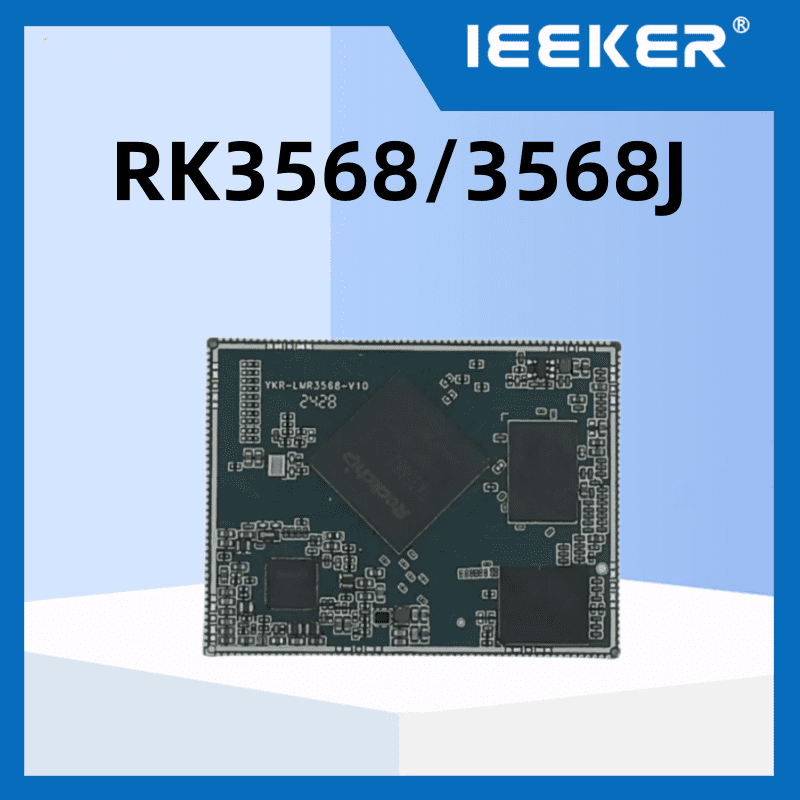
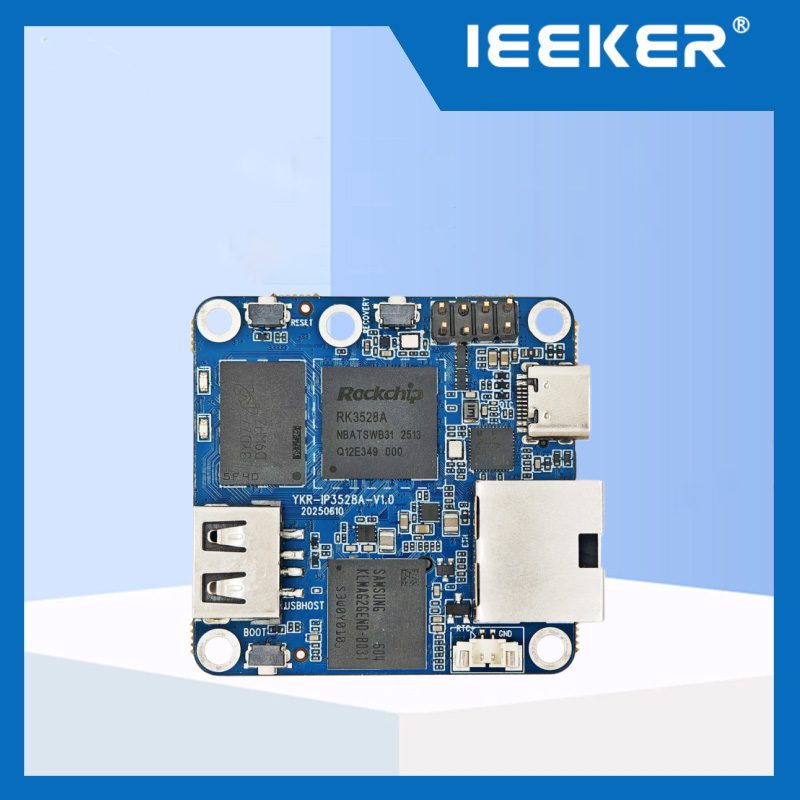
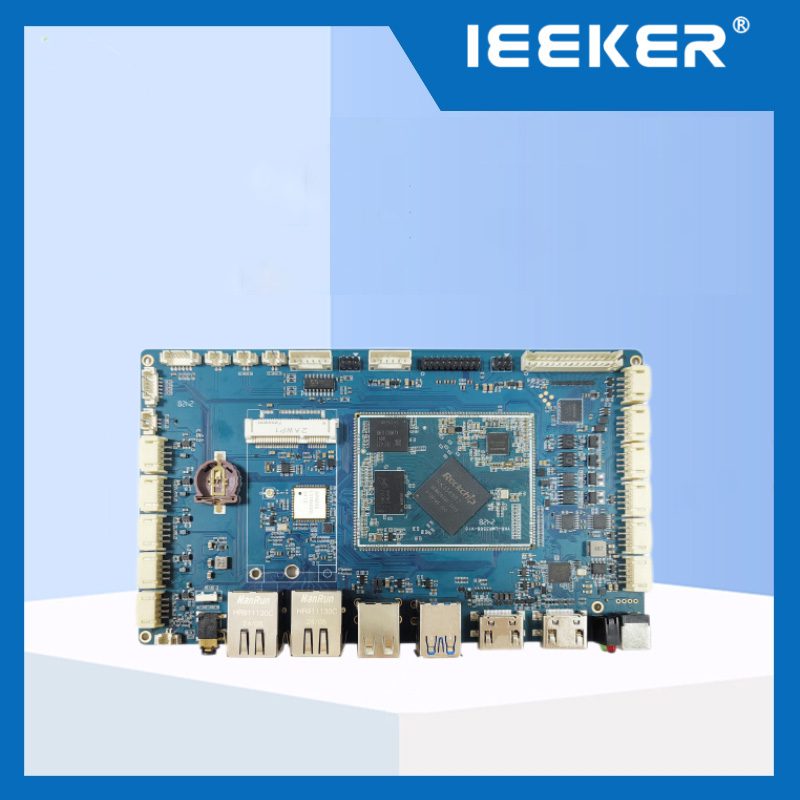
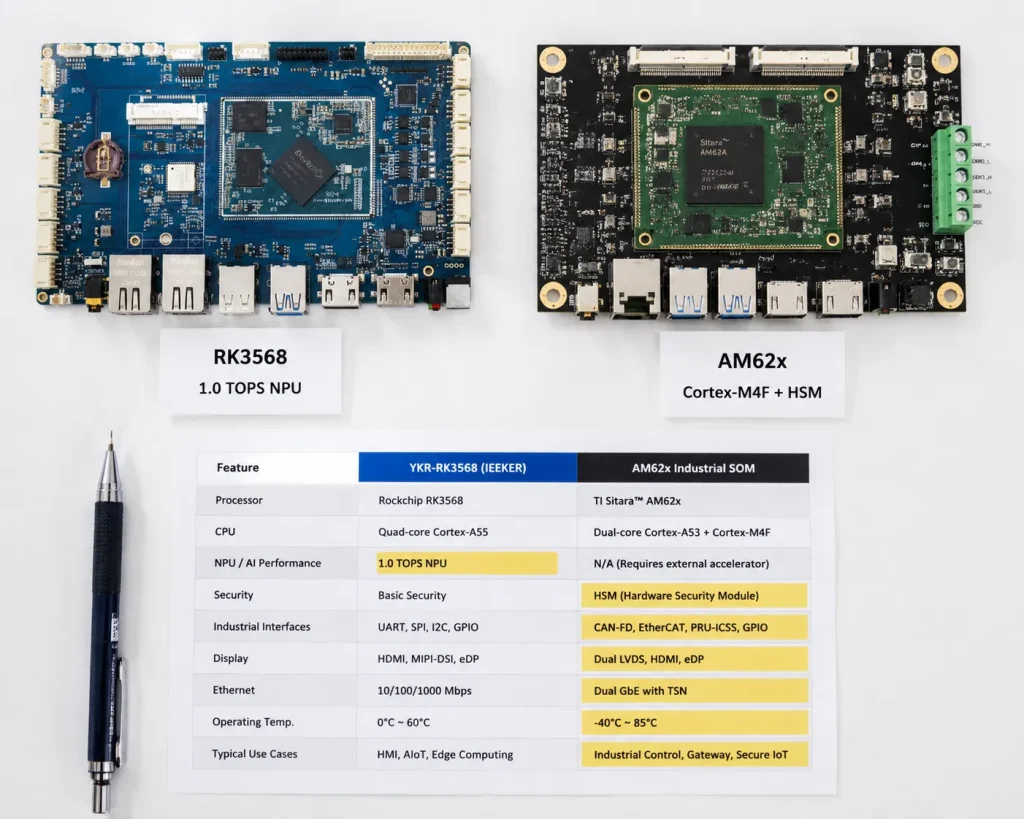
Краткий ответ: Сайт RK3568 против AM62x Решение проходит по одной четкой линии: возможности ИИ против долгосрочности контракта. The ieeker Плата разработчика YKR-RK3568 включает в себя NPU производительностью 1,0 TOPS, четыре выхода для одновременного вывода изображения на дисплеи и интерфейс PCIe 3.0 — все эти возможности отсутствуют или ограничены в AM62x — при меньшей стоимости системы. TI AM62x не имеет выделенного NPU (ИИ работает только на CPU/Neon SIMD), но предлагает сопроцессор реального времени Cortex-M4F, встроенный аппаратный модуль безопасности, а также документально подтвержденную компанией TI программу обеспечения срока службы на 15–20 лет — решающий фактор для медицинских, автомобильных и промышленных проектов с длительным жизненным циклом, где письменное обязательство по поставкам является договорным требованием.
Сайт RK3568 против AM62x Это сравнение постоянно возникает у инженеров, занимающихся разработкой промышленных встраиваемых проектов среднего уровня — панелей HMI, шлюзов IoT и модулей связи, где использование i.MX8M Plus или RK3588 было бы излишним с точки зрения затрат. Обе SoC ориентированы на один и тот же класс производительности четырехъядерных процессоров Cortex-A53/A55 и одинаковый диапазон энергопотребления 5–10 Вт, но они основаны на совершенно разных философиях проектирования: Rockchip разрабатывает решения для промышленных приложений, близких к потребительским, с интенсивным использованием мультимедиа и функциями искусственного интеллекта; TI — для промышленных и автомобильных систем с длительным жизненным циклом, в которых функциональная безопасность и защита являются первостепенными характеристиками.
В данном руководстве подробно рассмотрены RK3568 против AM62x компромиссы между возможностями NPU/ИИ, сопроцессором реального времени, функциями отображения и мультимедиа, архитектурой безопасности, промышленными интерфейсами, программой обеспечения долговечности и стоимостью перечня компонентов (BOM) — с четкой системой критериев для выбора платформы, наиболее подходящей для вашего проекта.
Основные выводы
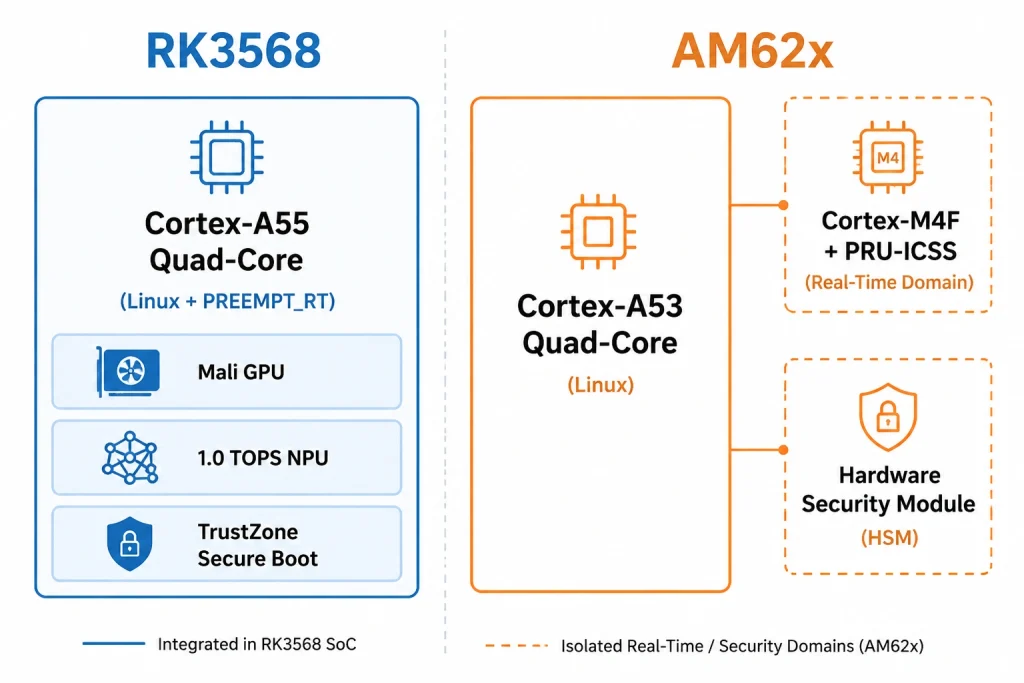
- RK3568 против AM62x Об искусственном интеллекте: RK3568 оснащен выделенным NPU производительностью 1,0 TOPS; AM62x имеет без NPU — ИИ работает исключительно на SIMD-ядрах Neon процессора, что подходит для базового распознавания лиц, но не для распознавания объектов в реальном времени
- AM62x оснащён сопроцессором реального времени Cortex-M4F + PRU-ICSS для ввода-вывода в режиме жесткого реального времени; в RK3568 отсутствует аналогичный изолированный домен реального времени
- AM62x оснащен встроенным аппаратным модулем безопасности (HSM) с функцией безопасной загрузки и ускорением криптографических вычислений; в RK3568 функция безопасной загрузки присутствует, но отсутствует выделенный модуль HSM
- RK3568 поддерживает 4 одновременных выхода на дисплей (MIPI DSI, два канала LVDS, eDP, HDMI); AM62x поддерживает 2 (два канала LVDS или LVDS + HDMI)
- Для микроконтроллера AM62x компании TI предусмотрена официально задокументированная программа обеспечения срока службы на 15–20 лет; микроконтроллер RK3568J отличается доступностью промышленного уровня, однако не имеет письменного обязательства по обеспечению срока службы более 15 лет
- RK3568 оснащён интерфейсами PCIe 3.0 ×2 и SATA III; AM62x не имеет ни PCIe, ни SATA — расширение интерфейсов требует более тщательного планирования
- 3-портовый гигабитный Ethernet-коммутатор AM62x с поддержкой TSN подходит для промышленных сетей Ethernet, где важна синхронность; два независимых MAC-контроллера 1GbE в RK3568 позволяют разделить функции шлюза LAN и WAN
- Для приложений в области человеко-машинного интерфейса (HMI), шлюзов Интернета вещей (IoT) и периферийного искусственного интеллекта (AI), не требующих заключения 15-летнего контракта, RK3568 является более функциональной и экономичной платформой
RK3568 и AM62x: полное сравнение технических характеристик
Ниже приведена полная сравнительная таблица технических характеристик для RK3568 против AM62x Сравнение. Указанные характеристики AM62x относятся к модели AM625 (самой высокопроизводительной модели в линейке, оснащенной 3D-графическим процессором).
| Параметр | Rockchip RK3568 (ieeker YKR-RK3568) | TI AM625 (AM62x) |
|---|---|---|
| CPU | 4× Cortex-A55 с тактовой частотой 2,0 ГГц | До 4 процессоров Cortex-A53 с тактовой частотой 1,4 ГГц |
| Сопроцессор реального времени | Нет | Cortex-M4F с тактовой частотой 400 МГц + двухъядерный PRU-ICSS |
| GPU | Мали-G52 2EE OpenGL ES 3.2, Vulkan 1.1 | 3D-графический процессор (только AM625) OpenGL ES 3.x |
| NPU / ускоритель искусственного интеллекта | 1.0 TOPS (RKNN) | Нет — ИИ на базе Cortex-A53 с технологией Neon SIMD |
| Безопасность | Безопасная загрузка (RSA/ECDSA) | Специализированный аппаратный модуль безопасности (HSM) + криптографический движок |
| Выводы дисплея | До 4 одновременно MIPI DSI, двойной LVDS, eDP, HDMI | 2 (двойной LVDS или LVDS+HDMI) |
| Декодирование видео | 4K H.265/H.264 со скоростью 60 кадров в секунду | 1080p H.264/H.265 |
| Ethernet | 2× независимых порта GbE | 3-портовый коммутатор GbE с поддержкой TSN (1 внутренний + 2 внешних) |
| PCIe | PCIe 3.0 × 2 | Нет |
| SATA / CAN | SATA III ✅ / CAN 2.0 × 2 | Нет SATA / CAN-FD × 3 (по данным PRU) |
| Промышленная температура | от -40 °C до +85 °C (RK3568J) | от -40°C до +85°C |
| Программа продления жизни | Промышленная доступность, отсутствие письменных гарантий на срок более 15 лет | Программа обеспечения срока службы TI на 15–20 лет |
| Поддержка Android | Отлично (Android 12, поддерживается) | Ориентировано на Linux/Yocto, без BSP для Android |
| Типичная спецификация комплектующих для SBC при заказе в 1 тыс. штук | ~$65–90 | ~$70–100 |
Разрыв в возможностях ИИ: NPU в RK3568 против ИИ, реализованного исключительно на CPU в AM62x
Самое важное техническое отличие в RK3568 против AM62x Главное отличие заключается в вычислительной мощности ИИ — и разница здесь очевидна. Чип RK3568 оснащён выделенным 1.0 TOPS NPU с использованием архитектуры RKNN — того же набора инструментов, который применяется во всем семействе чипов Rockchip RK3566/RK3568/RK3588. AM62x имеет вообще нет специального нейронного процессора. Согласно собственному позиционированию компании TI, возможности AM62x в области искусственного интеллекта реализуются за счет программного обеспечения, работающего на блоках Neon SIMD ядер Cortex-A53, что подходит для «простые функции искусственного интеллекта, такие как распознавание лиц и другие усовершенствования интерфейса человек-машина» — а не обнаружение объектов в реальном времени или многоклассовое распознавание.
На практике это означает: модель обнаружения объектов YOLOv5s, которая работает со скоростью ~22 кадров в секунду на NPU чипа RK3568 с помощью RKNN-Toolkit2, при инференции исключительно на CPU чипа AM62x будет работать со скоростью значительно ниже 1 кадра в секунду — Ускорение Neon SIMD помогает при выполнении простых операций (базовое распознавание лиц с помощью каскадов Хаара, облегченное распознавание ключевых слов), но не может обеспечить инференцию в реальном времени для современных моделей компьютерного зрения на основе CNN.
Если в плане реализации вашего проекта предусмотрено любое из следующих направлений, NPU процессора RK3568 является обязательным требованием, которое AM62x не может удовлетворить без внешнего ускорителя ИИ (что приводит к увеличению стоимости, занимаемой площади на плате и зависимости от PCIe или USB, что становится проблематичным из-за отсутствия PCIe в AM62x): обнаружение дефектов, распознавание лиц с частотой видеокадров, распознавание жестов, профилактическое обслуживание с использованием моделей CNN/LSTM или любой контроль качества на основе систем технического зрения. Для приложений, в которых действительно отсутствуют требования к ИИ/машинному обучению — чистый сбор данных, преобразование протоколов, базовый дисплей HMI — этот недостаток не имеет значения, и на первый план выходят другие преимущества AM62x.
RK3568 против AM62x: управление в реальном времени и аппаратная безопасность
В чем серия AM62x опережает конкурентов в RK3568 против AM62x Сравнение проводится в двух областях, имеющих важное значение для промышленных разработок, связанных с безопасностью и защитой: ввод-вывод в режиме реального времени и аппаратная архитектура безопасности.
Cortex-M4F + PRU-ICSS: изолированная область реального времени
AM62x оснащён Процессор Cortex-M4F с тактовой частотой 400 МГц и двухъядерный блок PRU-ICSS (программируемый блок реального времени) — оба изолированы от ядра приложения Linux и имеют собственную память и каналы ввода-вывода. Как Документация Toradex по Verdin AM62, эта гетерогенная архитектура позволяет переносить задачи, требующие жесткого реального времени, на процессор M4 для обеспечения чрезвычайно низкой задержки; для этих целей компания TI предоставляет инструментарий FreeRTOS. Кроме того, PRU-ICSS обеспечивает реализацию протоколов ввода-вывода в режиме реального времени с битовым управлением (пользовательские интерфейсы энкодеров, реализации ведомых устройств EtherCAT, точная генерация ШИМ), что было бы невозможно на универсальном процессоре под управлением Linux.
У RK3568 нет эквивалентной изолированной области реального времени. Ядро Linux с патчем PREEMPT_RT на RK3568 демонстрирует хорошую производительность в режиме «мягкого» реального времени (типичная задержка прерывания составляет 180–220 мкс, как описано в нашей Сравнение RK3568 и i.MX8M Plus), но это принципиально отличается от выделенного, изолированного домена микроконтроллера, который продолжает работать даже в случае сбоя стороны Linux или во время перезагрузки.
Аппаратный модуль безопасности: встроенный криптографический процессор серии AM62x
AM62x включает в себя специализированный аппаратный модуль безопасности (HSM) с программируемым пользователем защищенным ядром, криптографическим движком с поддержкой сеансов и выделенным DMA для обеспечения безопасности — специально разработан для обеспечения безопасной цепочки загрузки, шифрованных образов прошивки и управления ключами, изолированных от основного процессора приложений. Это значительно более надёжное решение по сравнению с реализацией безопасной загрузки в RK3568, которая опирается на зону TrustZone основного процессора, а не на физически отдельный домен безопасности.
Для продуктов, требующих официальной сертификации по стандартам безопасности (Common Criteria, IEC 62443 для промышленной кибербезопасности) или выполняющих конфиденциальные криптографические операции (платежные терминалы, системы безопасного контроля доступа, устройства регистрации данных с шифрованием), модуль HSM AM62x обеспечивает аппаратную основу, упрощающую процесс сертификации. Для типовых промышленных устройств HMI и шлюзов, не подпадающих под эти специфические требования к сертификации, достаточно функции безопасной загрузки RK3568.
С производственного цеха: выбор между AM62x и RK3568 в стартапе по производству медицинского оборудования
Около года назад к нам обратился стартап из Нидерландов, занимающийся разработкой медицинского оборудования, который создавал портативное диагностическое устройство — карманный прибор, сочетающий в себе 5-дюймовый сенсорный дисплей, специальный модуль оптического датчика, возможность подключения по Bluetooth к сопутствующему приложению и встроенную модель машинного обучения для предварительной классификации результатов. Они рассматривали в качестве вариантов как платформу AM62x, так и RK3568 и обратились к нам за объективной оценкой, учитывая, что мы производим платы на базе RK3568.
Их требования противоречили друг другу. Модель машинного обучения для классификации — CNN, обученная на данных их оптических датчиков, — требовала вычислений в реальном времени непосредственно в точке измерения, что указывало на NPU чипа RK3568. Однако их устройство проходило сертификацию в качестве медицинского устройства класса IIa в соответствии с регламентом MDR ЕС, в рамках которой значительное внимание уделялось документально подтверждённому сроку службы компонентов (обязательство по поставкам в течение как минимум 10 лет было частью их стратегии подачи заявки на сертификацию) и документации по архитектуре безопасности подсистемы обработки данных — оба этих фактора говорили в пользу AM62x.
Мы дали им конкретную рекомендацию: сначала создать прототип на платформе RK3568, чтобы проверить точность модели машинного обучения в реальных условиях и время выполнения инференса, поскольку в случае, если модель не сможет достичь требуемых ими <2-second result time on AM62x's CPU-only inference, the AM62x path was a non-starter regardless of its other advantages. We supplied a YKR-RK3568 evaluation board, and their ML team validated their quantized model at 380ms inference time — well within spec, with significant headroom.
Поскольку требование по искусственному интеллекту на базе RK3568 было выполнено, остался нерешенным вопрос о гарантии 10-летнего срока службы. Мы совместно с ними разработали альтернативный подход: вместо того, чтобы полагаться исключительно на обязательства Rockchip на уровне SoC, мы структурировали соглашение о гарантированном запасе, охватывающее их прогнозируемый 10-летний объем поставок на основе наихудшего сценария спроса, указанного в их заявке на получение разрешения регулирующих органов, в сочетании с нашей письменной политикой уведомления об изменении компонентов (ECN). Их консультант по вопросам нормативно-правового регулирования подтвердил, что это соответствует требованиям технической документации MDR в отношении рисков цепочки поставок — письменное обязательство поставщика в сочетании с буферным запасом считается приемлемым эквивалентом программы обеспечения долговечности от производителя микросхем для их классификации рисков.
Через одиннадцать месяцев их устройство прошло экспертизу технической документации в соответствии с MDR, при этом в разделе, посвящённом рискам цепочки поставок, были упомянуты конструкция на базе RK3568 и наш договор о поставках, и никаких дополнительных вопросов не возникло. Вывод: программа обеспечения долговечности AM62x от TI является ценной, но не единственной возможностью для удовлетворения требований к поставкам с длительным жизненным циклом — и когда поддержка ИИ является обязательным требованием, стоит изучить обязательства на уровне поставщиков, прежде чем выбирать AM62x исключительно из соображений долговечности.
Сравнение дисплеев, мультимедийных устройств и промышленных интерфейсов
Помимо искусственного интеллекта и архитектуры реального времени, чипы RK3568 и AM62x значительно различаются по возможностям вывода изображения и интерфейсам расширения — что имеет важное значение для панелей HMI, шлюзов и промышленных решений с несколькими периферийными устройствами.
Дисплей: преимущество 4-выходного чипа RK3568
RK3568 поддерживает до четырёх одновременных выходов на дисплей (MIPI DSI, двойной LVDS, eDP, HDMI 2.0) и декодирование видео 4K в форматах H.265/H.264 со скоростью 60 кадров в секунду. AM62x (вариант AM625) поддерживает двойной LVDS или LVDS+HDMI — два выхода — с декодированием видео, ограниченным разрешением 1080p. Для приложений HMI с одним дисплеем обоих вариантов вполне достаточно. Для конфигураций с двумя дисплеями (панель оператора + дисплей супервайзера или основной дисплей + предварительный просмотр с камеры) резерв производительности RK3568 значительно больше. Подробности о выборе интерфейса дисплея RK3568 (LVDS, MIPI DSI или eDP) для проектирования промышленных HMI см. в нашем Руководство по панели HMI на базе RK3568.
Сетевые технологии: коммутатор TSN против двух независимых MAC-адресов
Встроенный 3-портовый гигабитный Ethernet-коммутатор AM62x с Сети с поддержкой синхронизации времени (TSN) Поддержка TSN является настоящим фактором, выделяющим данное решение среди других в сфере промышленных Ethernet-приложений — протоколы PROFINET IRT, EtherCAT и другие детерминированные Ethernet-протоколы получают прямые преимущества от коммутации с поддержкой TSN на уровне SoC, без использования внешних микросхем коммутаторов. Два независимых MAC-контроллера GbE в RK3568 служат другой цели: разделению сетей LAN и WAN для архитектур шлюзов (как описано в нашей Руководство по использованию шлюза IoT на базе RK3568), а не детерминированный Ethernet реального времени. Если ваше приложение представляет собой промышленный Ethernet-узел на базе TSN, встроенный коммутатор AM62x будет более подходящим архитектурным решением.
Расширение: отсутствие интерфейсов PCIe и SATA на платформе AM62x
Благодаря интерфейсам PCIe 3.0 ×2 и SATA III, реализованным в RK3568, можно без проблем интегрировать модемы 4G/5G, накопители NVMe/SSD, а также дополнительные платы расширения. AM62x не имеет ни того, ни другого — возможности расширения ограничены интерфейсами USB, SDIO (для модулей Wi-Fi/BT) и интерфейсами CAN-FD/последовательной связи через PRU. Для проектов шлюзов IoT, требующих сотовой связи и локального хранения исторических данных, отсутствие PCIe в AM62x означает, что сотовые модемы подключаются через USB (что функционально, но менее удобно, чем PCIe M.2), а возможность подключения SSD-накопителей по SATA отсутствует — доступны только eMMC или SD-карты.
RK3568 против AM62x: руководство по выбору
Выберите ieeker YKR-RK3568, если:
- Ваша заявка содержит любые вычисления в области ИИ/машинного обучения — обнаружение объектов, распознавание лиц, выявление аномалий, визуальный контроль качества. ИИ на базе одного только процессора AM62x не способен обрабатывать эти задачи в режиме реального времени.
- Вам нужно более 2 одновременных выходов на дисплей или декодирование видео 4K — графический процессор Mali-G52 и дисплейный контроллер с 4 выходами в RK3568 обеспечивают значительный запас производительности по сравнению с AM62x
- Для вашего проекта требуется PCIe (сотовый модем, SSD-накопитель NVMe) или Накопители SATA — AM62x не поддерживает изначально
- Вам нужно широкая поддержка Android — BSP для RK3568 под управлением Android 12 активно поддерживается; для AM62x разработка ведётся преимущественно под Linux/Yocto, без поддержки Android
- Риски, связанные с вашей цепочкой поставок, можно устранить с помощью обязательства на уровне поставщиков (залоговые запасы, письменная политика в отношении ECN), а не требовать от поставщика микросхем специальной программы сроком на 15 и более лет
Выберите AM62x, если:
- В вашем проекте есть отсутствие требований к вычислениям в области ИИ/машинного обучения — исключительно отображение информации на интерфейсе человека-машины (HMI), сбор данных или преобразование протоколов без выполнения задач, связанных с машинным зрением или распознаванием образов
- Вам нужен изолированная область реального времени — Cortex-M4F + PRU-ICSS для контуров управления в режиме жесткого реального времени, пользовательских протоколов энкодеров или реализации ведомых устройств EtherCAT/PROFINET
- Для вашего продукта требуется Коммутация Ethernet с поддержкой TSN на уровне SoC для детерминированного промышленного Ethernet
- В вашей заявке на получение разрешения конкретно указано, что требуется документально подтвержденная программа обеспечения срока службы чипов от производителя на 15–20 лет в рамках оценки рисков цепочки поставок, при этом альтернативные варианты на уровне поставщиков не принимаются вашим органом по сертификации
- Ваш проект выигрывает благодаря специализированный аппаратный модуль безопасности для официальной сертификации безопасности (IEC 62443, «Общие критерии»)
IEEKER YKR-RK3568 для промышленных встраиваемых проектов
Иикер Плата разработчика YKR-RK3568 предоставляет промышленным проектам NPU RK3568 с производительностью 1,0 TOPS, возможность подключения к 4 дисплеям, два порта GbE, интерфейсы PCIe 3.0 и SATA III — устройства производятся собственными силами с проверенными образами Buildroot, Debian 11, Ubuntu 22.04 и Android 12. Для команд, рассматривающих RK3568 против AM62x Если в списке требований предусмотрены возможности искусственного интеллекта — пусть даже в качестве предварительного варианта — мы рекомендуем сначала создать прототип на базе RK3568, поскольку вариант с AM62x станет полностью недоступным, если инференция исключительно на ЦП не позволит достичь заданного уровня задержки.
Для проектов с подтвержденными договорными требованиями к сроку службы 15 лет и более, в которых искусственный интеллект не требуется, отлично подходят платформы на базе AM62x от партнеров TI (Toradex, Variscite, Phytec) — и мы с удовольствием предоставим объективное сравнение, если вы рассматриваете оба варианта. Что касается снижения рисков, связанных с цепочкой поставок, в качестве альтернативы программам обеспечения долговечности от производителей микросхем, ознакомьтесь с нашим Руководство по оценке производителей встраиваемых плат включая запасы, находящиеся под таможенным контролем, и структуры политики ECN.
Рассматриваете возможность использования RK3568 или AM62x в своём проекте?
Расскажите нам о своих требованиях к ИИ и ожиданиях в отношении срока службы — мы дадим вам честный ответ, в том числе о том, не окажется ли AM62x более подходящим решением.
→ Заказать оценочную плату YKR-RK3568 →Часто задаваемые вопросы
Есть ли в AM62x NPU?
Нет. В семействе AM62x (AM623/AM625) нет выделенного нейронного процессора (Neural Processing Unit). Рабочие нагрузки ИИ/машинного обучения выполняются с использованием SIMD-инструкций Neon ядер Cortex-A53, которые, по описанию TI, подходят для «простых функций ИИ, таких как распознавание лиц и другие усовершенствования человеко-машинного интерфейса», а не для обнаружения объектов в реальном времени. Если вашему приложению требуется вычисление на основе CNN со скоростью видеокадров, потребуется NPU RK3568 с производительностью 1,0 TOPS — AM62x не способен выполнять такие задачи без внешнего ускорителя.
Что лучше подойдет для панели HMI: RK3568 или AM62x?
RK3568 подходит для большинства панелей HMI — он поддерживает больше выходов для дисплеев (до 4 по сравнению с 2 у AM62x), декодирует видео в формате 4K (в отличие от 1080p у AM62x) и оснащён более мощным графическим процессором. Если панели HMI также требуются функции на основе технологий машинного зрения (вход в систему с помощью распознавания лиц, отображение результатов визуального контроля), необходим NPU процессора RK3568. AM62x по-прежнему остается приемлемым выбором для простых панелей HMI с одним дисплеем, не требующих ИИ, особенно в тех случаях, когда поддержка TSN Ethernet или гарантия срока службы в 15 лет важнее возможностей дисплея.
Что такое PRU-ICSS в процессорах серии AM62x?
PRU-ICSS (программируемый блок реального времени и подсистема промышленной связи) представляет собой пару компактных, высокоскоростных и детерминированных сопроцессоров, встроенных в SoC TI Sitara, включая серию AM62x. Они работают независимо от основных ядер Linux и используются для реализации протоколов реального времени с битовой манипуляцией — считывания данных из пользовательских датчиков, точного формирования ШИМ, а также реализации протоколов промышленных полевых шин, таких как ведомое устройство EtherCAT или Profibus, которые требуют синхронизации на уровне микросекунд, которую основной процессор не может гарантировать в условиях планирования задач под управлением Linux.
Сможет ли RK3568 сравниться с программой TI, обеспечивающей 15-летний срок службы?
Компания Rockchip не публикует программу обеспечения срока службы на уровне микросхем в течение 15–20 лет, аналогичную программе TI. Вариант RK3568J промышленного класса имеет продленный срок поставки, однако для программ с жестким договорным требованием о сроке поставки 15 лет и более это представляет собой реальный пробел. Тем не менее обязательства на уровне поставщика — программы гарантированных запасов, письменные политики в отношении уведомлений об инженерных изменениях (ECN) и процедуры «последней закупки» — позволяют учесть требования к рискам цепочки поставок во многих нормативных рамках, как описано в нашем руководство по оценке поставщиков. Приемлемость такого подхода зависит от требований вашего конкретного органа по сертификации.
Что такое сеть с поддержкой синхронизации времени (TSN) и нужна ли она мне?
Сети с поддержкой синхронизации времени (TSN) — это набор стандартов IEEE 802.1, обеспечивающих детерминированную связь по Ethernet с низкой задержкой, подходящую для промышленного управления. TSN необходим, если ваше приложение реализует PROFINET IRT, EtherCAT-over-TSN или другие детерминированные промышленные протоколы Ethernet, требующие гарантированной ограниченной задержки. Для стандартных шлюзов на базе Modbus TCP, OPC UA или MQTT (большинство приложений шлюзов IoT) TSN не требуется, и стандартного двойного GbE-интерфейса RK3568 вполне достаточно. См. наш Руководство по использованию шлюза IoT на базе RK3568 для типичной сетевой архитектуры шлюза.
Источники и ссылки
- TI AM625: обновления промышленных SoC — TechInsights
- Технические характеристики AM625 — Texas Instruments
- Компьютерный модуль Verdin AM62 — Toradex
- Системный модуль TI AM62x — Variscite
- Сети с привязкой ко времени — Википедия
- ARM против x86 в промышленных одноплатных компьютерах — Сообщество разработчиков